
 Русский
 සිංහල
 Deutsch
 Français
 Nederlands
 Italiano
 Español
 简体中文
Sigiriya — The Rock That a King Turned Into a Fortress of Guilt and Glory
A Kingdom, a Betrayal, a Rock
Sigiriya's story begins with a royal family divided by succession, power and fear. King Dhatusena ruled Anuradhapura in the 5th century, and after his reign the struggle for the throne became entangled with his two sons, Kasyapa and Moggallana. Historical chronicles describe Kasyapa seizing power and Dhatusena's death after the king was imprisoned. The details belong partly to a historical record shaped by later chroniclers, so the story must be read with care: what survives is a mixture of documented history, royal chronicle and tradition.
The story of Kasyapa is often told as the story of a son who took the throne through betrayal and then built a magnificent capital on the rock. The broad historical framework is well established, but individual details of the conflict and the king's motives are preserved through chronicles and later tradition rather than modern eyewitness evidence.
A Palace in the Sky
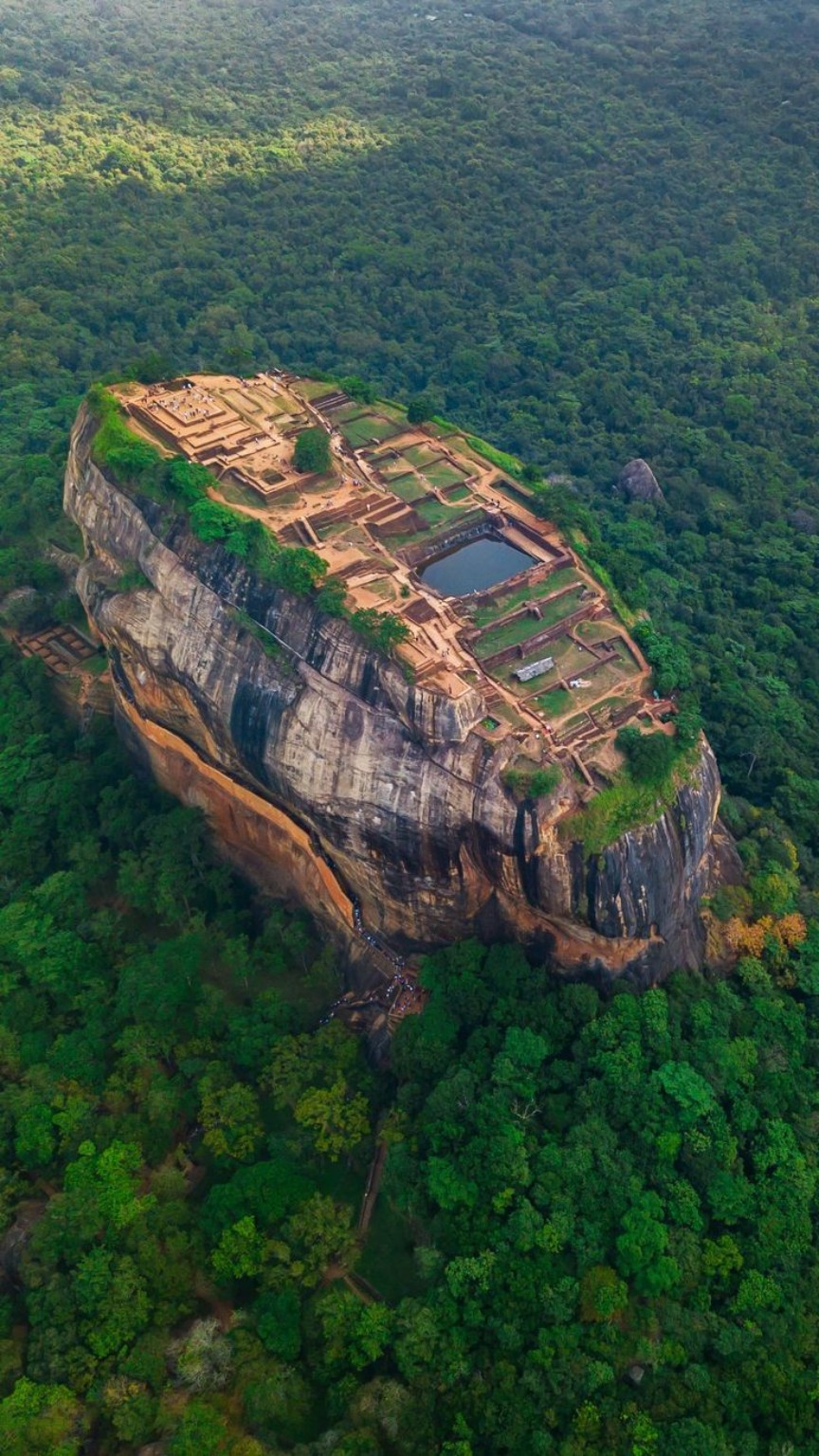
After taking the throne, Kasyapa established his capital at Sigiriya. Between approximately 477 and 495 CE, the rock and the landscape around it were transformed into an extraordinary royal complex. Gardens were laid out at its base, moats and defensive walls framed the approaches, and carefully engineered water systems carried water through pools, channels and fountains.
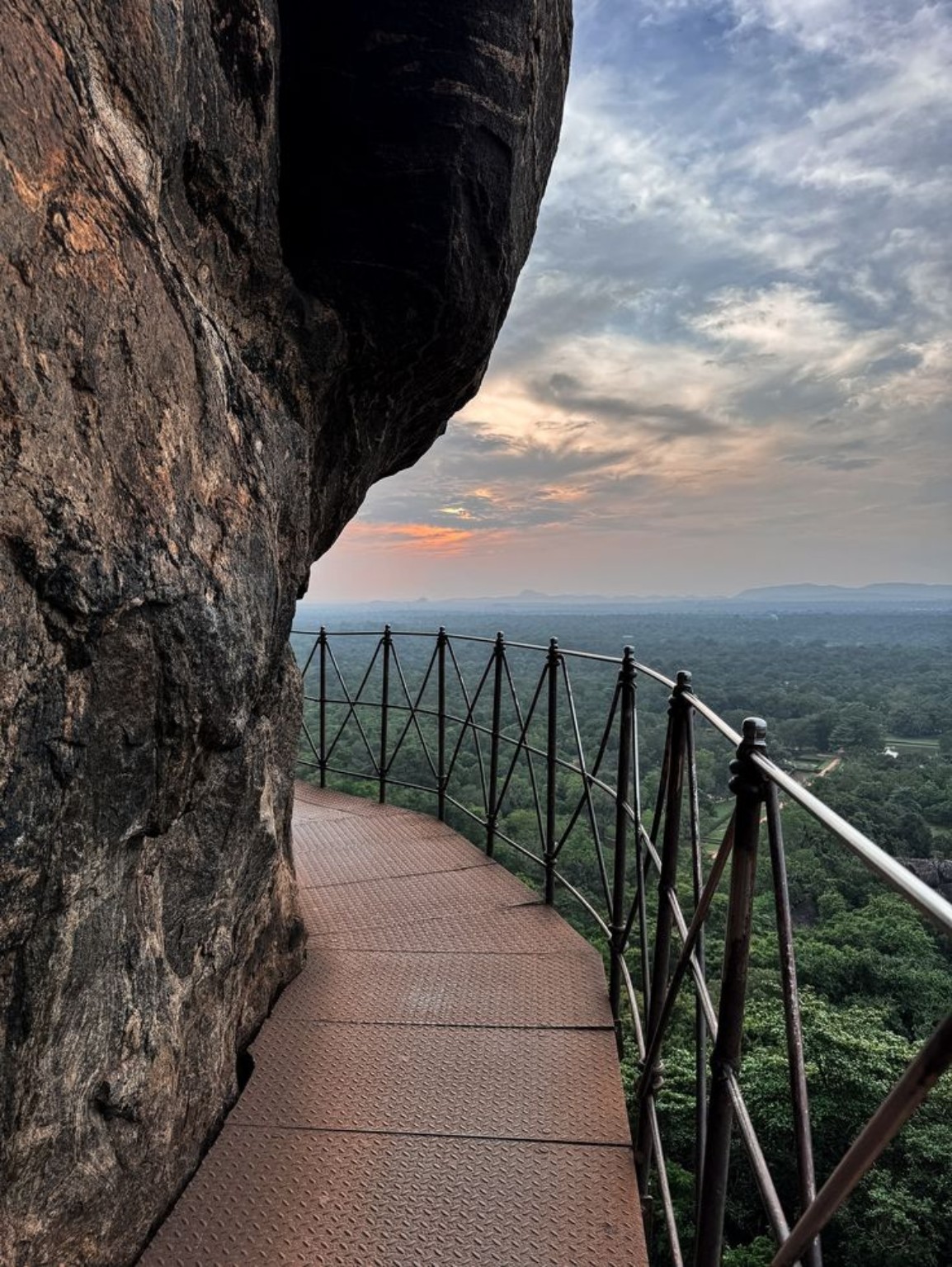
Then came the climb. The route toward the summit passes through terraces, galleries and stairways, rising toward a palace that once occupied the top of the rock. Today the ascent involves roughly 1,200 steps, but the number tells only part of the story. The experience is also about the engineering that made movement, water and architecture possible on a steep granite outcrop above the surrounding plain.
The Women in the Clouds
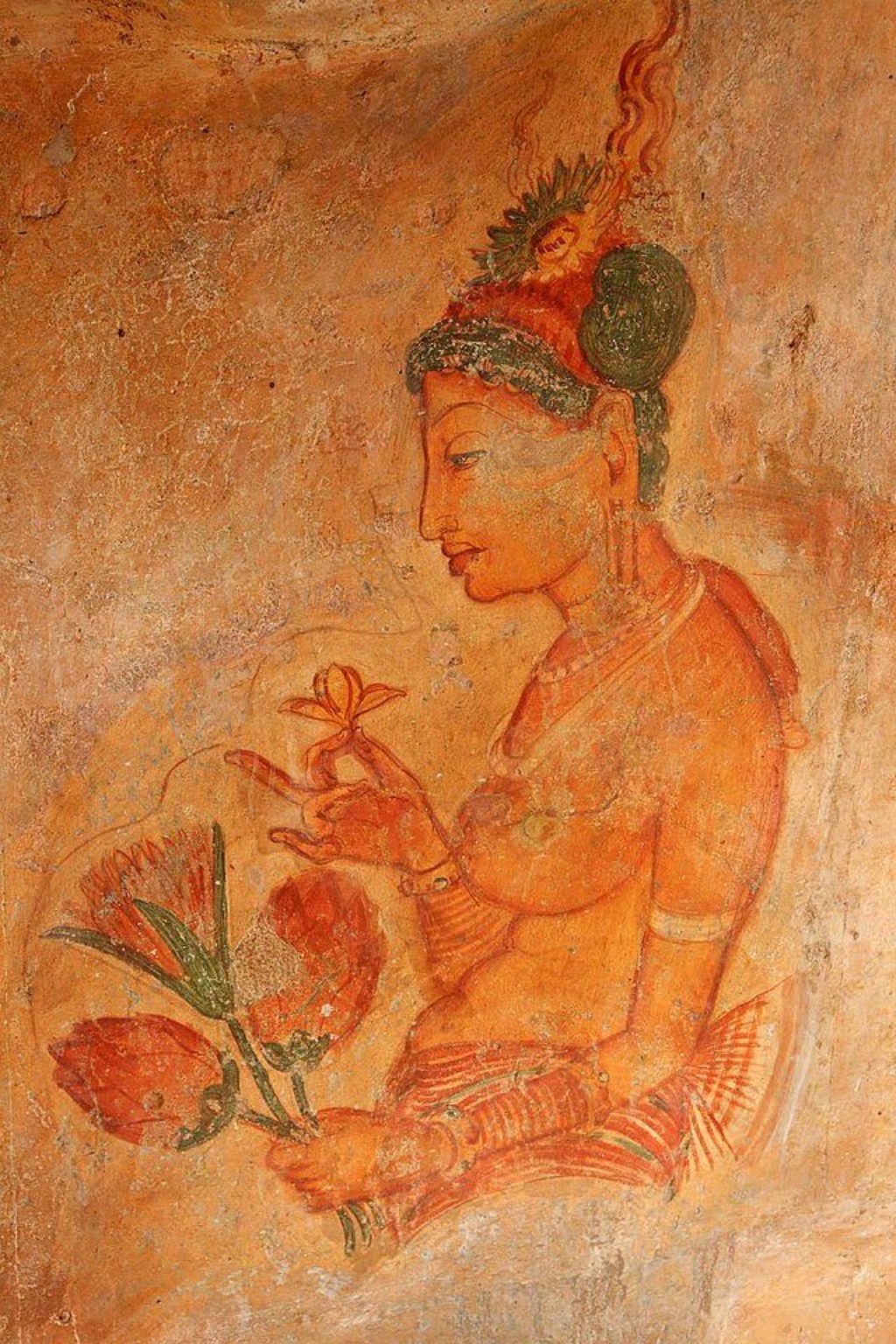
Partway up the rock, the atmosphere changes. The stone gives way to colour, and the famous frescoes appear on the sheltered rock face. The women painted here are often called the “maidens of Sigiriya,” but their precise identity and meaning remain subjects of interpretation. They have been understood variously as celestial beings, court women or figures connected with a larger religious and symbolic programme.
Hundreds of figures are thought to have once formed a much larger painted world, while only a small number survive today. Their beauty is undeniable; their exact story remains less certain.
The Mirror Wall
Further along the rock is the Mirror Wall, once polished so carefully that it was said to reflect the king. Centuries later, visitors began leaving poems and observations on its surface. These inscriptions transformed a royal architectural feature into something unexpectedly intimate: a record of ordinary people who came to Sigiriya long after Kasyapa's court had disappeared.
The voices are important because they remind us that Sigiriya did not become meaningful only in the modern era. People were looking at these paintings, walking these passages and responding to this landscape centuries ago.
The Lion's Gate
Near the upper approach, the remains of enormous lion paws mark the entrance to the final ascent. The original gateway was designed around the image of a gigantic lion, and the ancient name associated with the place is commonly understood as “Lion Rock.” Only the paws remain today, but they are enough to reveal the scale of the idea: the visitor was not simply climbing a mountain, but entering a royal world built into it.
A Palace Above the Jungle
At the summit, the remains of the palace complex occupy roughly 1.5 hectares. Pools, foundations, terraces and the wide horizon create a remarkable sense of place. From here, the forest appears almost continuous, while the ancient gardens below become patterns in the landscape.
Eighteen Years, Then the Reckoning
Kasyapa's reign lasted roughly eighteen years. Eventually Moggallana returned to Sri Lanka and challenged him. The final battle is remembered through dramatic stories, including an account involving Kasyapa's elephant changing direction and the king believing his army had abandoned him. The exact circumstances of his death and the details of the battlefield remain part history, part chronicle and part later tradition.
Sigiriya gives us ruins, water systems, paintings and stone — but not a complete record of the human decisions behind them. Some of the most dramatic parts of Kasyapa's final story remain impossible to verify in every detail.
From Royal Palace to Monastery
After Kasyapa's era, the site did not simply vanish. Sigiriya became associated with Buddhist monastic activity, and its royal identity gradually gave way to a quieter religious life before the complex was eventually abandoned and reclaimed by the forest. In the modern era, archaeological work revealed the scale of what remained.
Sigiriya was inscribed on the UNESCO World Heritage List in 1982. It is sometimes popularly called the “Eighth Wonder of the World,” although that is an unofficial nickname rather than a UNESCO designation. What matters more is the extraordinary combination preserved here: a natural rock, an ancient capital, royal gardens, hydraulic engineering, paintings, inscriptions and a landscape that still makes the past feel physically close.
Pidurangala — The Mountain Beside the King's Rock
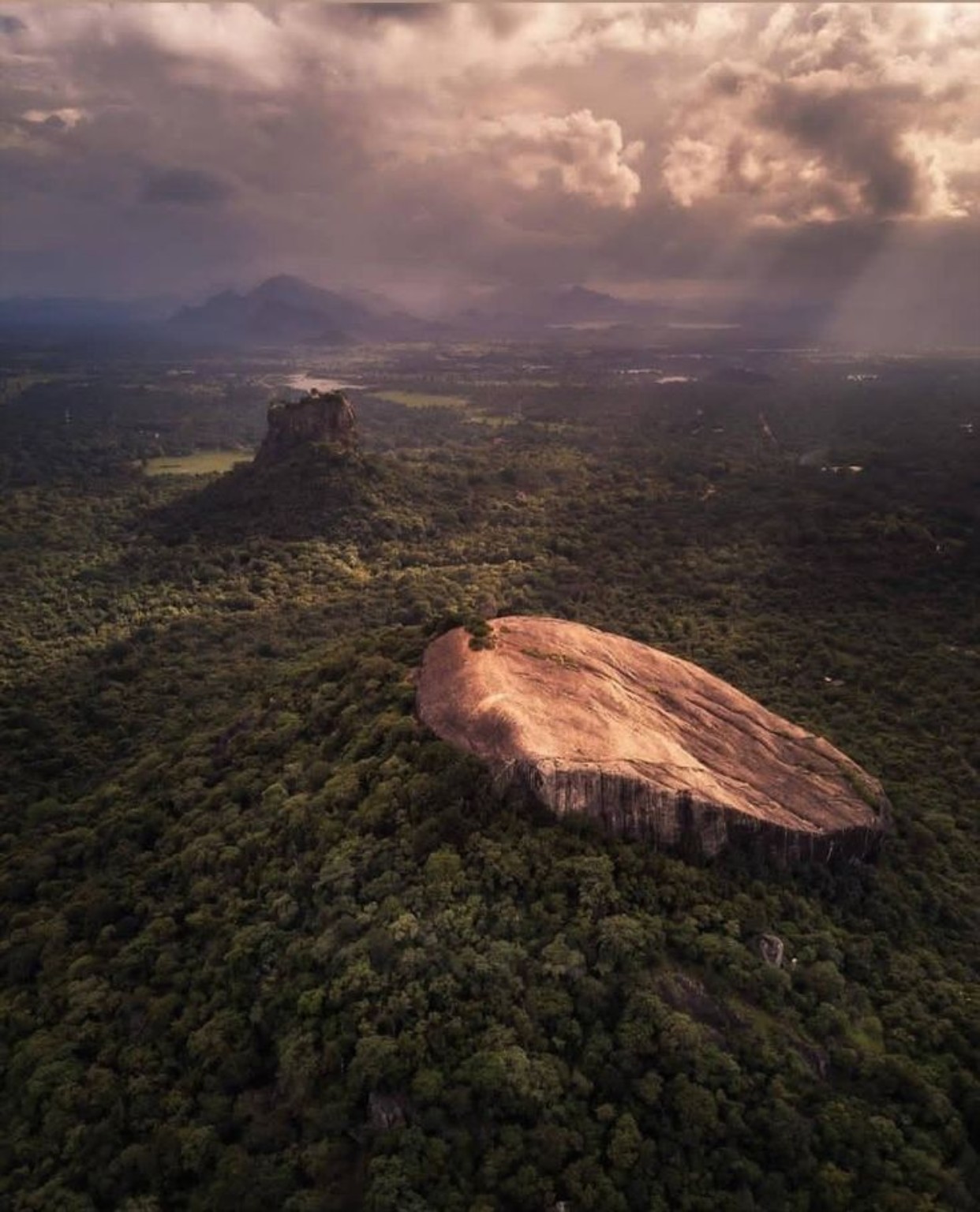
If Sigiriya tells the story of a king building upward, Pidurangala tells a quieter story. The rock stands nearby, close enough to frame Sigiriya in the distance, yet different enough to feel like another world. Its history is closely associated with Buddhist monastic life, meditation and the natural landscape.
The Mountain Beside the Palace
Pidurangala was associated with Buddhist monks long before and around the period of Kasyapa's reign. A longstanding tradition connects the monastery with monks who were moved or resettled when the king developed Sigiriya as his royal centre. The historical details of that transition are not fully documented, but the connection between Pidurangala's monastic landscape and the Sigiriya complex remains an important part of the site's story.
Stories of monks being moved to Pidurangala because Kasyapa wanted the rock area for his royal capital are widely repeated. They form part of the site's traditional narrative, while the precise historical circumstances should be treated as tradition rather than proven fact.
The Buddha in the Cave
Among Pidurangala's archaeological features are caves, monastic remains and the remains of a reclining Buddha image. The atmosphere is very different from the monumental approach to Sigiriya. Here the rock feels less like a palace and more like shelter — a place shaped by meditation, devotion and the rhythms of monastic life.
The Story of Kasyapa's Final Rest
A stupa on or around Pidurangala has sometimes been associated in local tradition with Kasyapa's cremation. The story is evocative, but there is no conclusive archaeological evidence that can establish the tradition as fact. It belongs in the larger landscape of beliefs that have grown around the two rocks and the king who made Sigiriya famous.
The association between Kasyapa and a final resting place near Pidurangala is part of local tradition. It is best understood as a belief attached to the landscape, not as a conclusively proven historical event.
The Climb to Pidurangala
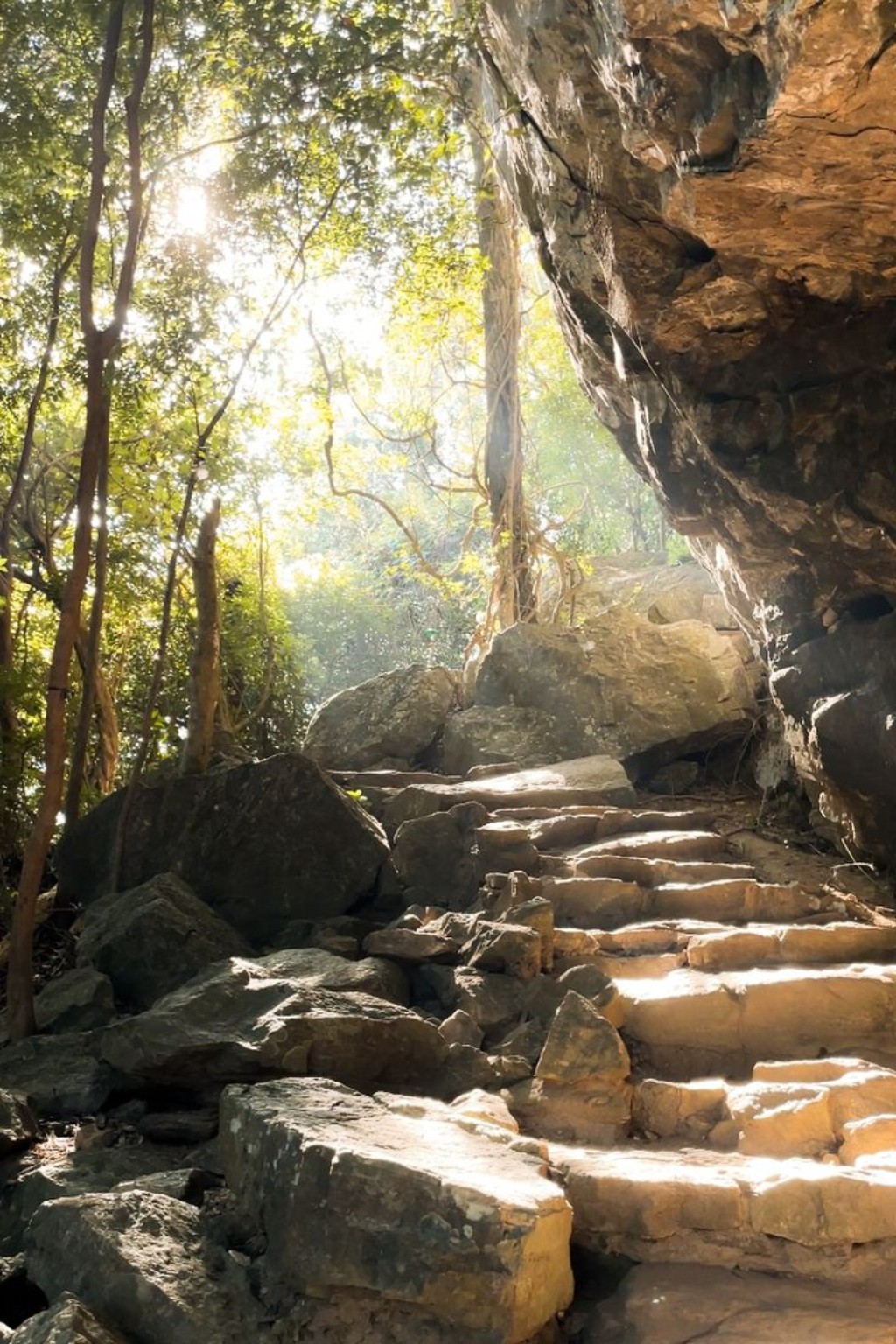
The climb is rougher and more natural than the engineered ascent of Sigiriya. The route passes through forest, over stone and around boulders, with roots and uneven surfaces forming part of the experience. Near the top, the landscape opens dramatically.
Sunrise Above the Jungle
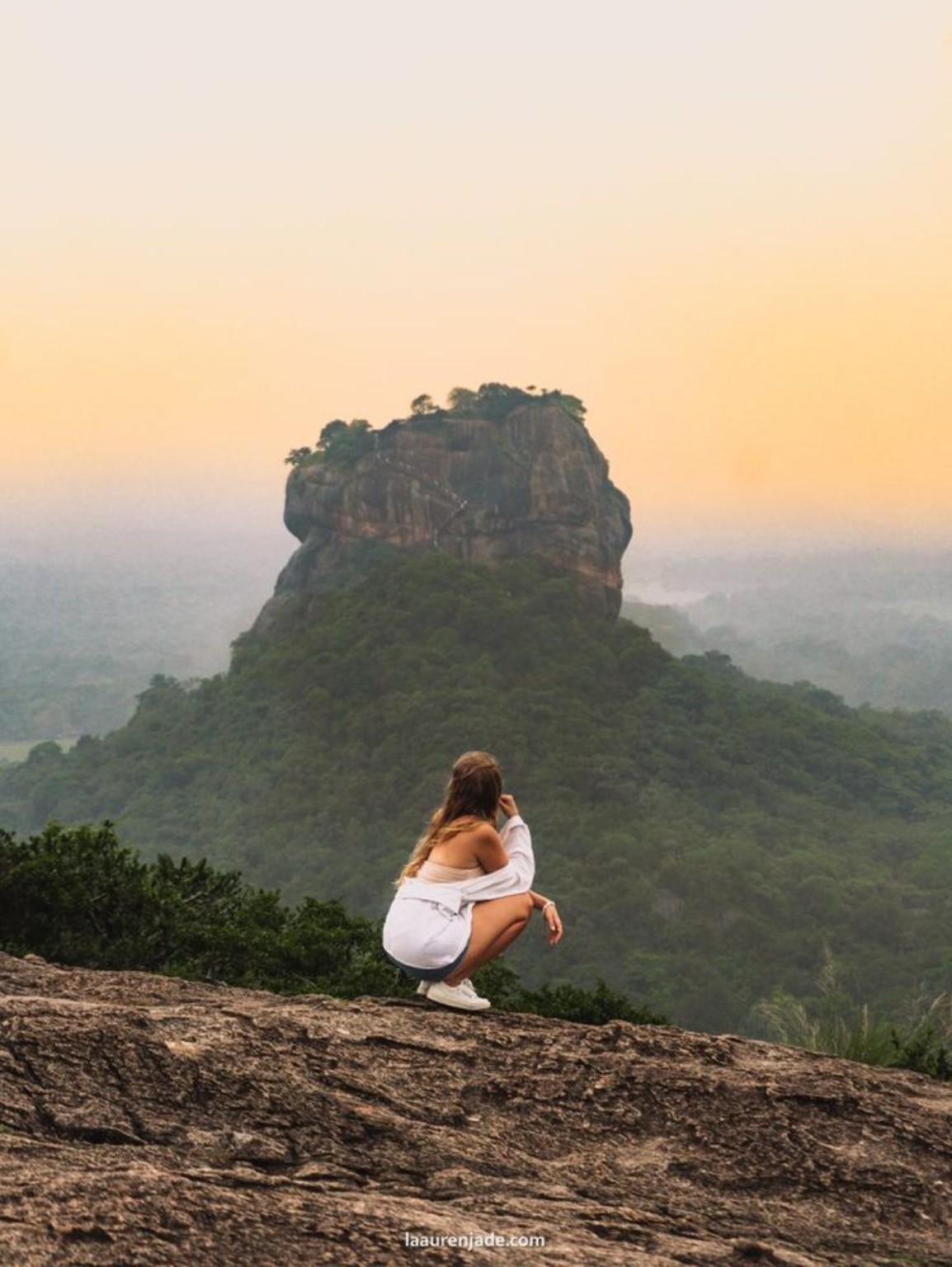
At sunrise, Pidurangala becomes one of the most atmospheric places to understand the relationship between the two rocks. Sigiriya rises across the forest, and the wider plain slowly appears through the changing light. The view is not only beautiful; it changes the way the history feels. From this side, the palace rock becomes part of a much larger landscape — one in which kings, monks, forests and villages occupied the same horizon.
Dambulla — The Cave That Sheltered a King and Became a Golden Temple
A Refuge Before a Sanctuary
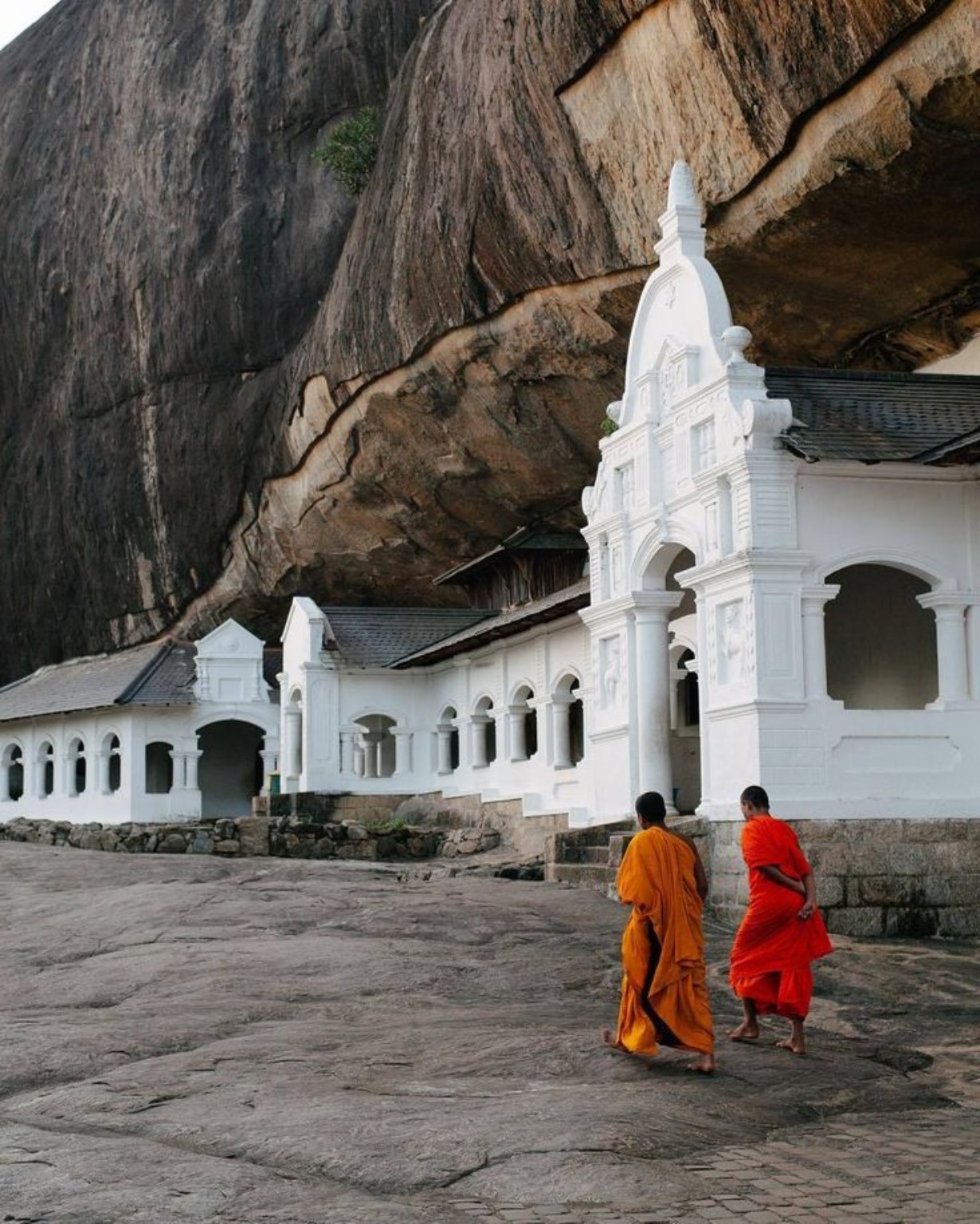
Travel north from the Sigiriya landscape and another kind of ancient story emerges. Dambulla is not a palace in the sky. It is a sanctuary carved beneath an overhanging rock, where devotion accumulated layer upon layer across more than two thousand years.
Tradition connects the caves with King Valagamba, also known as Vattagamani Abhaya, who was forced into exile in the 1st century BCE. According to the traditional account, the caves provided refuge during a period of political upheaval. After returning to power, the king supported the development of a religious complex here. Whether every detail of the story unfolded exactly as later tradition describes is difficult to establish, but the long association between Dambulla, kingship and Buddhist devotion is central to the site's identity.
Twenty-Two Centuries of Devotion
Dambulla has been a sacred pilgrimage site for roughly 22 centuries. Its five cave sanctuaries were repeatedly restored, repainted and renewed by different generations. This is one reason the caves feel different from a frozen archaeological ruin: the site is still a living place of worship.
The Rangiri Dambulla Cave Temple was inscribed on the UNESCO World Heritage List in 1991. UNESCO describes the complex as a cave monastery with five sanctuaries, approximately 2,100 square metres of mural paintings and 157 statues — an extraordinary concentration of religious art within natural rock chambers.
Five Sacred Caves
The five caves are not identical. Each has its own spatial character, sculptures and painted surfaces, yet together they form a continuous religious landscape. The walls and ceilings are covered with images of the Buddha, scenes connected with Buddhist tradition and decorative patterns that transform rough stone into a richly coloured interior.
Cave One — The Reclining Buddha
The first cave, commonly known as Devaraja Viharaya, is dominated by a large reclining Buddha image. The sculpture occupies the cave almost like a quiet architectural presence, while the surrounding surfaces carry the visual language of the temple.
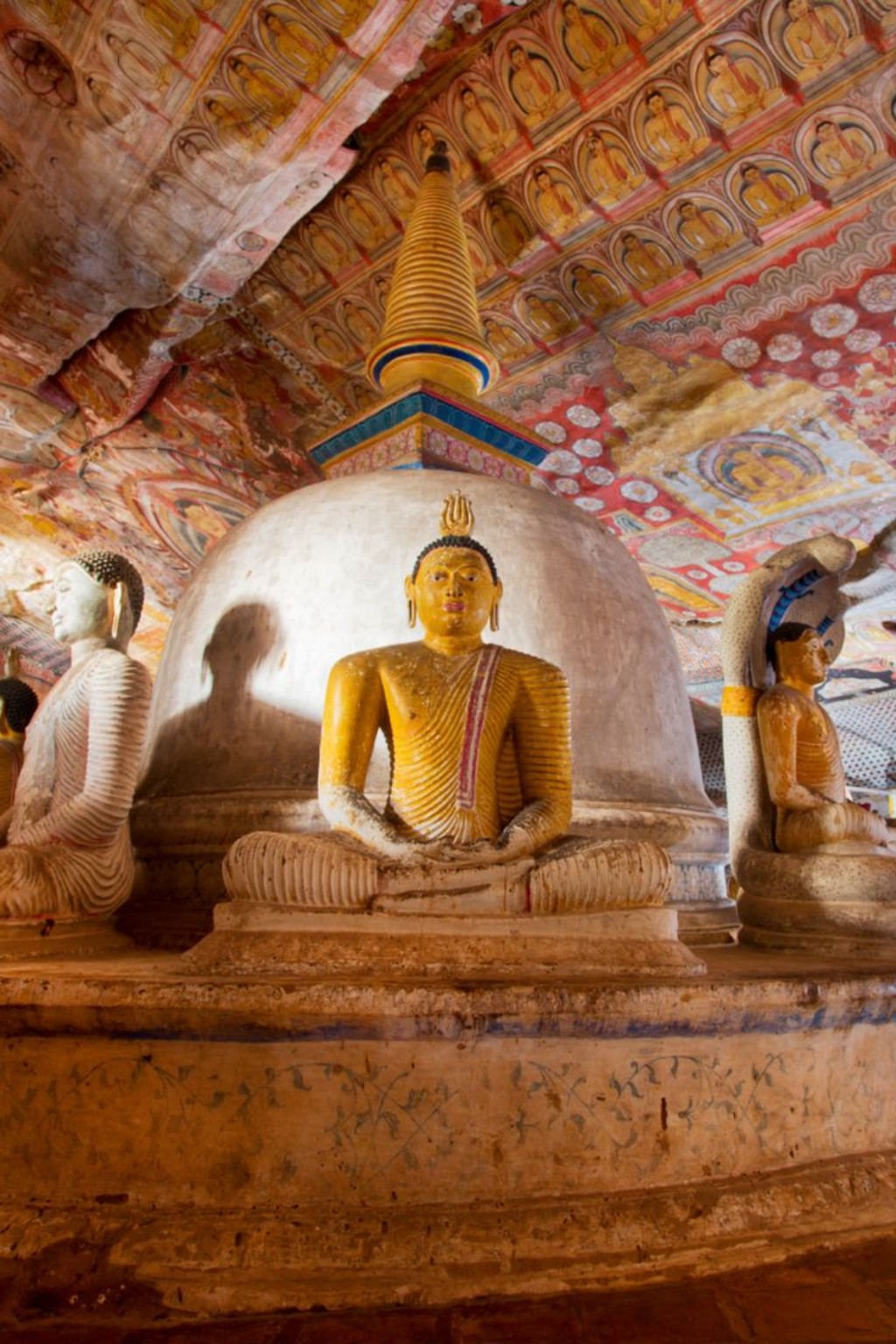
Cave Two — The Great Cave
The second cave, Maharaja Viharaya, is the largest and among the most visually overwhelming. Statues gather beneath a ceiling covered in paintings, and the space carries the feeling of a complete sacred world rather than a single object on display. Traditions associate the cave with kings including Valagamba and Nissanka Malla, whose patronage belongs to different periods of Sri Lankan history.
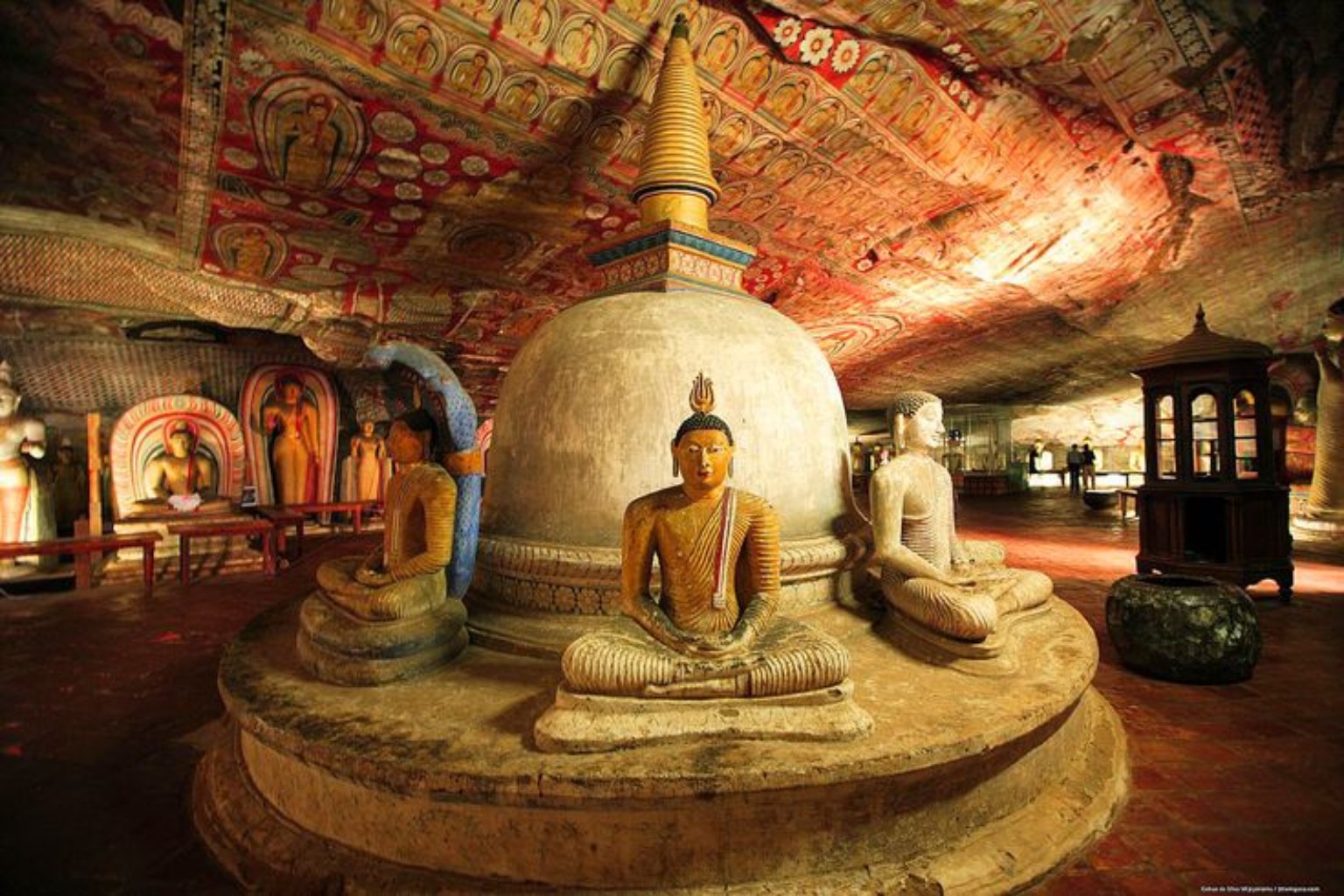
The Golden Connection
Nissanka Malla is associated with restoration and patronage at Dambulla, while later Kandyan rulers and artists contributed to the paintings and religious architecture that visitors see today. The result is not the work of one king or one century. It is a visual record of repeated acts of preservation, devotion and renewal.
Buddhas, Kings and Deities
Dambulla's imagery also reveals the cultural layers of Sri Lanka. Alongside the Buddha images are figures associated with Hindu traditions, including deities such as Vishnu and Ganesh. Their presence reflects the long interaction of religious traditions on the island rather than a simple separation between communities and beliefs.
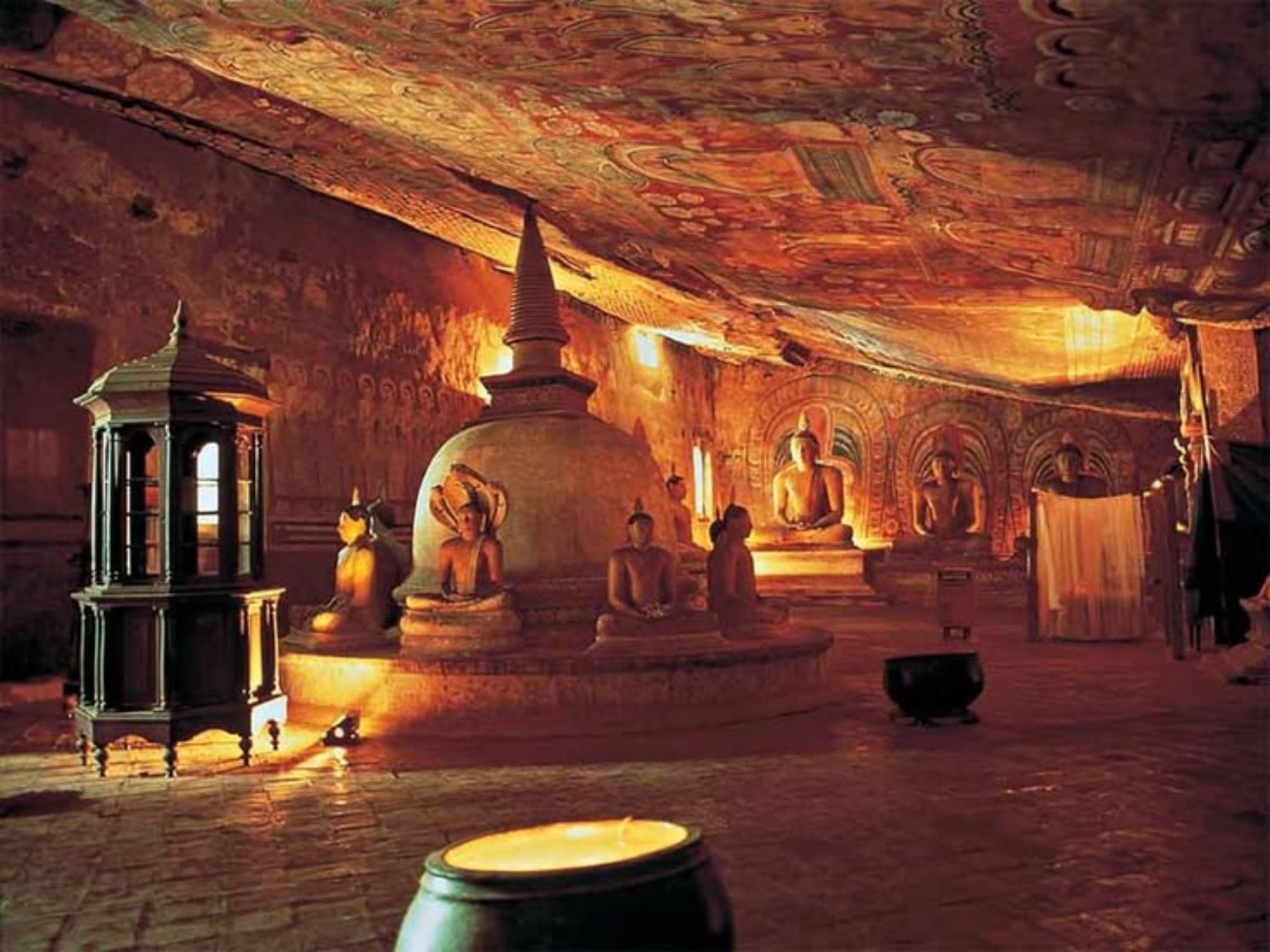
The Stories Beneath the Stone
Dambulla has also collected its own mysteries and stories. Visitors may hear tales of hidden treasure, ancient discoveries and objects concealed within the caves. Such stories are part of the living folklore surrounding old sacred places, but they should not be confused with established archaeological evidence.
Ancient sites accumulate stories because stone preserves atmosphere long after it loses context. At Dambulla, the line between history, tradition and folklore is part of what makes the caves so compelling — but it is important to keep those categories distinct.
When the Light Begins to Fade
Perhaps the best way to understand Dambulla is not by rushing through the caves. As the light outside softens, the painted ceilings become warmer and the rock chambers grow quieter. Swallows move through the openings, worship continues and the sculptures seem less like museum objects and more like participants in a place that has never completely stopped being used.
Three Places, One Landscape of Memory
Sigiriya, Pidurangala and Dambulla are different kinds of places. One was shaped by royal ambition, one by monastic life and natural landscape, and one by more than two millennia of Buddhist devotion. Yet they sit within the same cultural landscape, close enough for a traveller to experience their differences within a single journey.
At Sigiriya, the story is about power made visible in stone and water. At Pidurangala, the landscape feels more contemplative — a mountain beside a palace, a place where the forest and the horizon take centre stage. At Dambulla, the focus turns inward, into caves where generations of worshippers have left their mark through paintings, sculpture and ritual.
The connection is not simply geographical. It is the continuity of people returning to remarkable places and giving them meaning.
Why These Places Still Matter
Ancient monuments can sometimes feel distant. Dates become numbers, kings become names, and ruins become photographs in a guidebook. Sigiriya, Pidurangala and Dambulla resist that distance because they can still be physically experienced.
You can climb the same enormous rock that shaped a king's imagination. You can stand on another mountain and look directly toward the fortress he built. You can enter caves where painted ceilings and statues still form the centre of living religious practice.
That physical encounter changes history. The past stops being something that happened somewhere else. It becomes a place beneath your feet, a wall beside you, a horizon in front of you.
One Day, Three Different Perspectives
There is no single correct way to experience the three places. A journey can begin at Pidurangala before sunrise, when the first light reveals Sigiriya across the jungle. From there, the day can move toward Sigiriya itself — into the gardens, up the rock, through the galleries and toward the summit.
Later, Dambulla changes the mood completely. Instead of climbing toward an open horizon, you move into the cool shade of the caves, where paintings and statues surround you. The sequence becomes almost cinematic: mountain sunrise, royal stone, then sacred darkness illuminated by colour.
The order can also be adjusted around weather, opening conditions, energy and the experience you want. The important thing is not to treat the three places as three boxes to tick. Give each one enough time to tell its own story.
Pidurangala — begin with the landscape, the climb and the view toward Sigiriya.
Sigiriya — walk through the ancient gardens, ascend the rock and encounter the palace, frescoes and Lion's Gate.
Dambulla — finish in the caves, surrounded by living Buddhist art and centuries of devotion.