
 Русский
 සිංහල
 Deutsch
 Français
 Nederlands
 Italiano
 Español
 简体中文
From Winter
to Tropics.
Why Sri Lanka feels so different — a journey through seasons, rain, sunshine, mountains, ocean and island life.
There is a moment when you arrive in Sri Lanka and immediately feel that you have entered another world.
The air is warm. The light feels different. Palm trees move in the breeze. Birds are already awake. The smell of rain, flowers, spices and the ocean can be somewhere in the same journey.
For travellers arriving from colder parts of the world, especially during winter, Sri Lanka can feel like stepping through a doorway from one season into another.
But Sri Lanka is more than a place to escape the cold.
And the numbers tell an even more interesting story.
01 · ONE ISLAND, DIFFERENT TEMPERATURES 🌡️
Sri Lanka's average temperature is around 27°C. But that does not mean the whole island feels the same. The central southern highlands rise above 2.5 km and strongly influence temperature, humidity and rainfall. (Sri Lanka Tourism)
So you can begin beside a warm tropical coast and later find yourself surrounded by misty mountains and tea fields.
But temperature is only the beginning. Where does all the rain go?
02 · THE ISLAND THAT CAN RECEIVE THOUSANDS OF MILLIMETRES OF RAIN 🌧️
Sri Lanka's average annual rainfall is about 1,851 mm, but rainfall varies enormously across the island. The southwest and central hills are much wetter than the dry zone. Those differences help create rainforest, waterfalls, rivers, tea country and dry-zone landscapes within a relatively small island.
So where does all that water go? Into forests. Into streams. Into waterfalls. Into rivers. And eventually, into the ocean.
03 · TWO MONSOONS — FOUR WEATHER SEASONS 🌦️
Sri Lanka's climate is shaped by two monsoon periods and two inter-monsoon periods. Sri Lanka Tourism describes four practical climate seasons for travellers:
And here is the fascinating part: while one side of the island is receiving rain, another region can be enjoying sunshine.
04 · THE WEATHER DOES NOT OBEY A POSTCARD 🌴
Imagine Sri Lanka as a photograph: blue ocean, palm trees, perfect sunshine. Beautiful. But that is only one version of the island.
Sri Lanka can also be grey clouds over tea country, rain falling through rainforest, mist covering a mountain, a dramatic sky above the ocean or a waterfall roaring after heavy rain.
05 · WHEN EL NIÑO CHANGES THE RHYTHM 🌍
Large-scale climate patterns can influence year-to-year weather. El Niño is one of them.
As of September 2026, NOAA's Climate Prediction Center has an El Niño Advisory in effect and says El Niño is strengthening, with a greater than 90% chance of a very strong event during the Northern Hemisphere fall and winter 2026–27. Sri Lanka's Department of Meteorology also warns that El Niño can cause Sri Lankan monthly rainfall to deviate from long-term averages, based on about 75 years of historical data.
06 · RAIN HAS ITS OWN BEAUTY 🌧️
Rain changes Sri Lanka. Leaves become darker. Streams become louder. The air smells of wet earth. Tea fields shine. Clouds settle over mountains. Waterfalls can transform.
Sometimes rain is not something to escape.
07 · THE RAINFOREST COMES ALIVE 🌿
In Sri Lanka's wet forests, rain is part of the ecosystem. Sinharaja, a UNESCO World Heritage Site, is one of the island's great remaining areas of primary tropical rainforest. More than 60% of its recorded tree species are endemic to Sri Lanka.
Rain does not merely fall on the forest. It helps create the world inside it — streams, moss, ferns, frogs, insects, birds and sounds you may never hear in a city.
08 · THE MOUNTAINS CREATE ANOTHER WORLD ⛰️
Climb higher and the island changes again. The central highlands contain tea plantations, waterfalls, valleys, forests and mist-covered ridges. Elevation changes temperature; mountains also influence wind, rainfall and humidity.
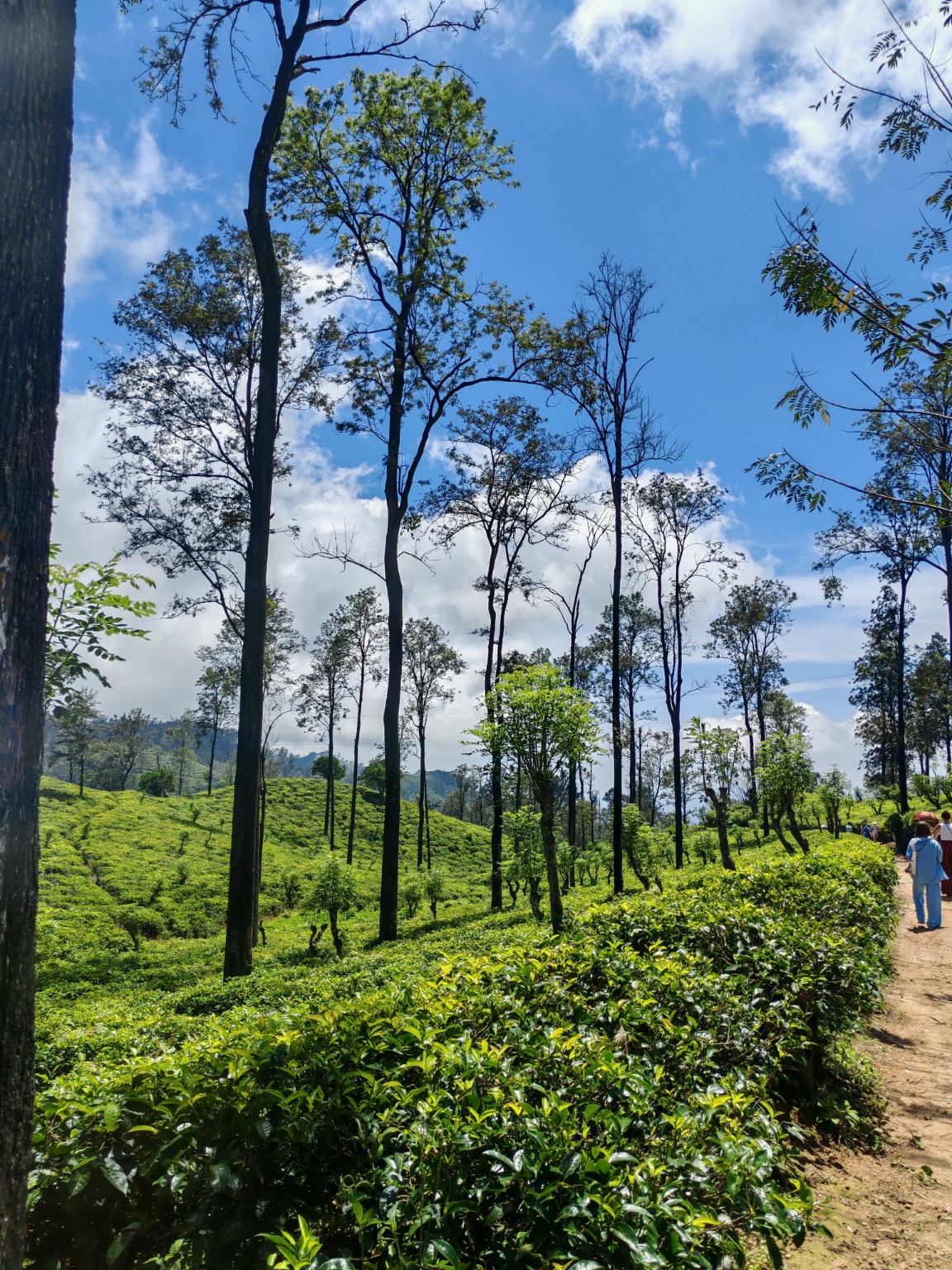
09 · TEA COUNTRY IN THE CLOUDS 🍃
There are mornings when the tea country almost disappears. Only the nearest tea bushes remain visible. A distant mountain becomes a silhouette. Mist moves slowly through the valley. Then the clouds lift and an entire green landscape appears.
Sri Lanka has nearly 500,000 acres of tea estates, according to Sri Lanka Tourism. Behind that number are plantations, factories, estate communities, villages, roads and generations of history.
10 · THE WATERFALL QUESTION 💧
Sri Lanka Tourism lists around 350 waterfalls across the island. Some are famous. Others are barely marked on a map. Some become dramatically stronger after rain.
And this creates a little mystery for travellers:
Sometimes you have to see it for yourself. But heavy rain can also make waterfalls, rivers and rocks dangerous. Nature decides the conditions.
11 · FROM MOUNTAIN TO OCEAN 🌊
The water that falls on the mountains does not simply disappear. Rain feeds streams. Streams join rivers. Rivers travel toward the coast. Eventually, the water reaches the Indian Ocean.
Perhaps that is one of the best ways to understand Sri Lanka.
12 · THE OCEAN CHANGES TOO
Sri Lanka has around 1,330 km of coastline. Different coasts offer different experiences: surfing, snorkelling, whale watching, fishing, coral reefs, lagoons, islands and quiet beaches.
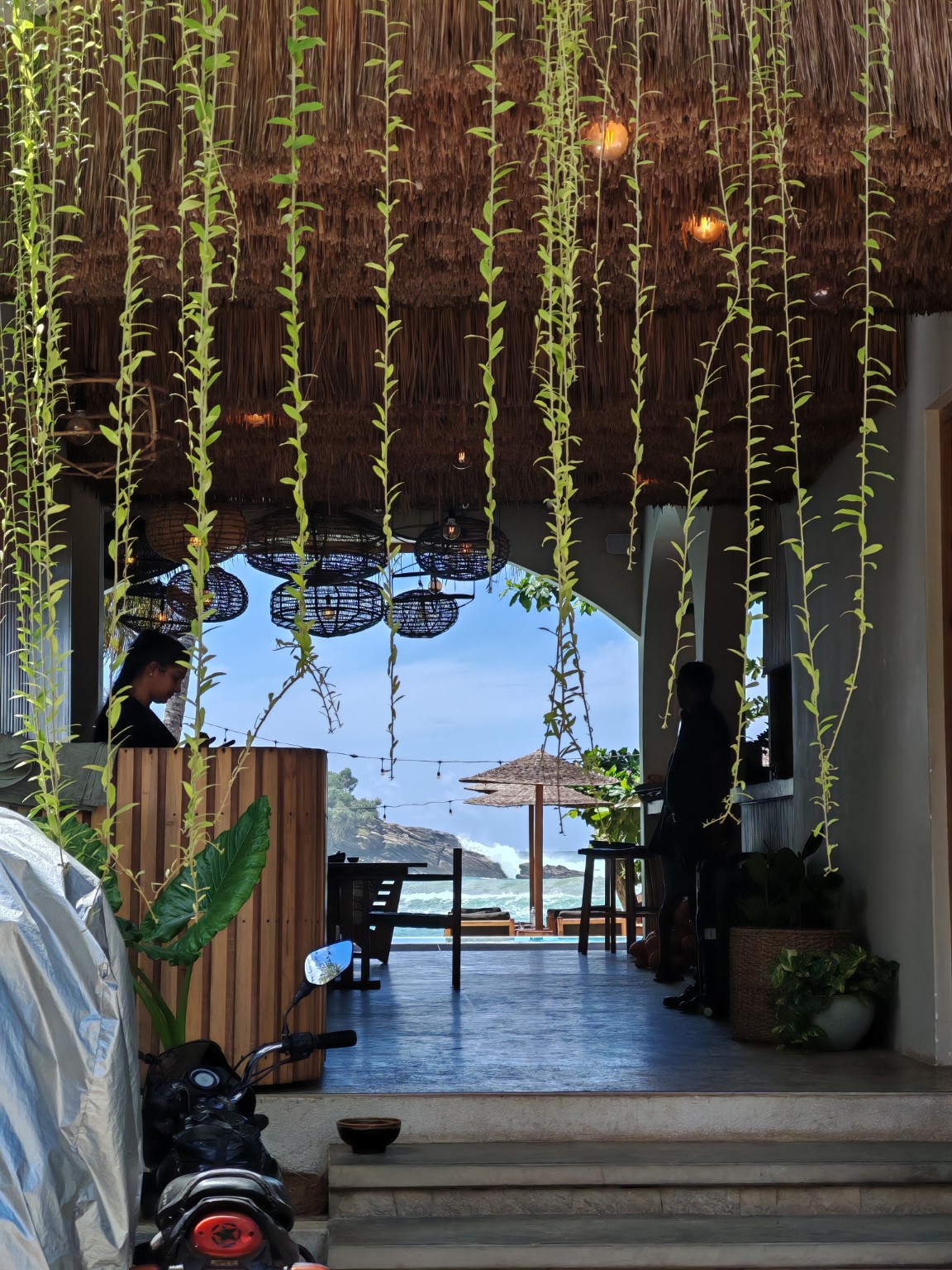
Because the monsoons affect different sides of the island at different times, the best coast for a particular beach experience can change with the season.
13 · WHEN THE RAIN MAKES THE BEACH QUIETER 🌧️🌊
A cloudy beach is not necessarily a bad beach. Sometimes the crowds disappear. The sea becomes darker. The sky becomes dramatic. The palms move in the wind.
14 · HOW HOT CAN IT FEEL? ☀️
Temperature is only part of tropical comfort. Humidity matters too. A day that looks manageable on a thermometer can feel much warmer when humidity is high.
That is why locals often plan around the heat: early mornings, shade during midday, water and a slower pace. For hikers especially, starting early can make a huge difference.
15 · A SMALL ISLAND WITH MANY CLIMATES 🗺️
Sri Lanka covers only 65,610 km². Yet within that area are eight UNESCO World Heritage properties, 15 national parks, nearly 500,000 acres of tea estates, around 350 waterfalls and a coastline of roughly 1,330 km.
16 · FOR THE ADVENTURE SEEKER 🥾
Hiking. Trekking. White-water rafting. Waterfalls. Abseiling. Wildlife safaris. Surfing. Snorkelling. Whale watching. Mountain summits. Long-distance trails.
Sometimes the best adventure is simply taking a road that does not look like the usual tourist route.
17 · FOR THE SLOW TRAVELLER ☕
Not everyone comes looking for adrenaline. Some people want a quiet morning, a cup of tea, a village road, a train window, a book beside the sea or a walk through a plantation.
18 · FROM WINTER TO WARMTH ❄️➡️🌴
For someone arriving from Russia or another northern country, the contrast can be dramatic.
You leave behind snow, cold mornings and winter clothing and arrive somewhere where palm trees move in warm air, the ocean is nearby, tea grows on misty mountains and rain can fall warm.
But perhaps the greatest change is not the temperature.
19 · FOR AIRLINE CREWS ✈️
For airline crews, time works differently.
Rosters can change. Layovers can change. Flights can arrive late. Sometimes there are only a few hours to explore.
KANRA SL creates private and flexible journeys for airline crews from different airlines, designed around available time and changing schedules where possible.
Some crews have a full day. Some have only a few hours.
20 · THE SPIRITUAL SIDE OF THE ISLAND 🕊️
There is another reason Sri Lanka can feel different.
A quiet forest. A temple at sunrise. Rain falling through trees. A mountain above the clouds. The sound of waves.
For some people, these moments feel grounding, cleansing or spiritually renewing. These are personal experiences and beliefs, not scientific claims.
21 · SRI LANKA AFTER THE RAIN 🌈
There is something special about the island immediately after rain. Colours become stronger. Leaves shine. The air feels fresh. Clouds move across mountains. Roads reflect the sky. Then sunlight slowly returns.
22 · WEATHER IS PART OF THE JOURNEY
A responsible traveller learns to work with nature. A mountain trail may become difficult. A waterfall may become unsafe. A boat trip may need to move. A beach plan may become a rainforest experience. A sunrise may disappear behind clouds.
And sometimes the unexpected day becomes the story you remember most.
23 · TRAVEL WITH THE SEASON 🌏
Instead of asking, “What is the perfect month for Sri Lanka?” ask: “Where should I go during that month?”
The answer depends on what you want — beach, mountains, wildlife, rainforest, whale watching, hiking or tea country.
24 · THE FORECAST CAN CHANGE — SO CAN THE PLAN
Weather forecasts are useful, but nature can still surprise you. Responsible travel means checking current conditions, following official warnings and allowing plans to adapt.
At KANRA, we believe a journey should have enough flexibility to respond to nature.
25 · KANRA — DISCOVER SRI LANKA DIFFERENTLY
At KANRA SL, we do not believe travelling is about collecting places. It is about experiencing them.
A mountain trail. A rainforest stream. A quiet beach. A village meal. A cup of Ceylon Tea. A conversation. A sudden tropical shower. A sunrise that does not go according to plan.
These small moments often become the memories that stay.
26 · ONE ISLAND. MANY WEATHER STORIES.
Sri Lanka can be sunny, rainy, misty, tropical, cool, windy — and sometimes several of these can happen during the same journey.
27 · FROM WINTER TO TROPICS
Perhaps the greatest difference is not between cold and warm.
It is between one way of living and another. Between rushing and slowing down. Between watching the clock and watching the clouds. Between looking at a destination and actually experiencing it.
Sri Lanka does not promise perfect weather every day.
And when you leave, you may take home more than photographs. You may take home the memory of warm rain, mountain mist, ocean air, forest sounds and a different rhythm of life.
From one world to another.
Sri Lanka — discover it your way.
KANRA SL
Real Journeys. Local Stories. Wild Sri Lanka.