
 Русский
 සිංහල
 Deutsch
 Français
 Nederlands
 Italiano
 Español
 简体中文
CEYLON TEA — FROM COFFEE TO TEA
The story behind Sri Lanka's most famous leaf — and the people, landscapes and history held inside a cup.
Before Sri Lanka became famous for tea, its mountains were covered in coffee.
The story of Ceylon Tea begins with coffee. In the nineteenth century, coffee became the great plantation crop of the central highlands. Roads and railways grew around the industry, and by the mid-1870s Ceylon had become the world's largest coffee producer. Then a plant disease changed everything.

01 · WHEN COFFEE WAS KING ☕
Large-scale coffee cultivation expanded through the central hills under British colonial rule. By 1878, around 278,000 acres of land were under coffee cultivation. The boom transformed the highlands and drove investment in roads, transport and commercial infrastructure.
The success did not last. In 1869, coffee rust was first observed at Madulsima. The disease spread through plantations and, in a little more than a decade, the coffee enterprise collapsed.

02 · THE DISEASE THAT CHANGED THE HIGHLANDS
Coffee rust, caused by the fungus Hemileia vastatrix, became the turning point. Planters looked for alternative crops. Experiments included tea, cinchona and other possibilities, but tea proved exceptionally suited to the island's hills.
03 · JAMES TAYLOR & THE BEGINNING OF CEYLON TEA 🍃
James Taylor became the first Ceylon planter to succeed with commercial tea. At Loolecondera near Kandy, he experimented with tea cultivation and manufacture. In 1867 he established a 19-acre tea plantation. By 1872, he had a fully equipped tea factory on the estate.
One of the most remarkable details is the scale of his early success: a first modest consignment of Loolecondera tea sent to England weighed only 23 pounds. That tiny shipment was part of the beginning of an industry that would reshape the island's highlands.
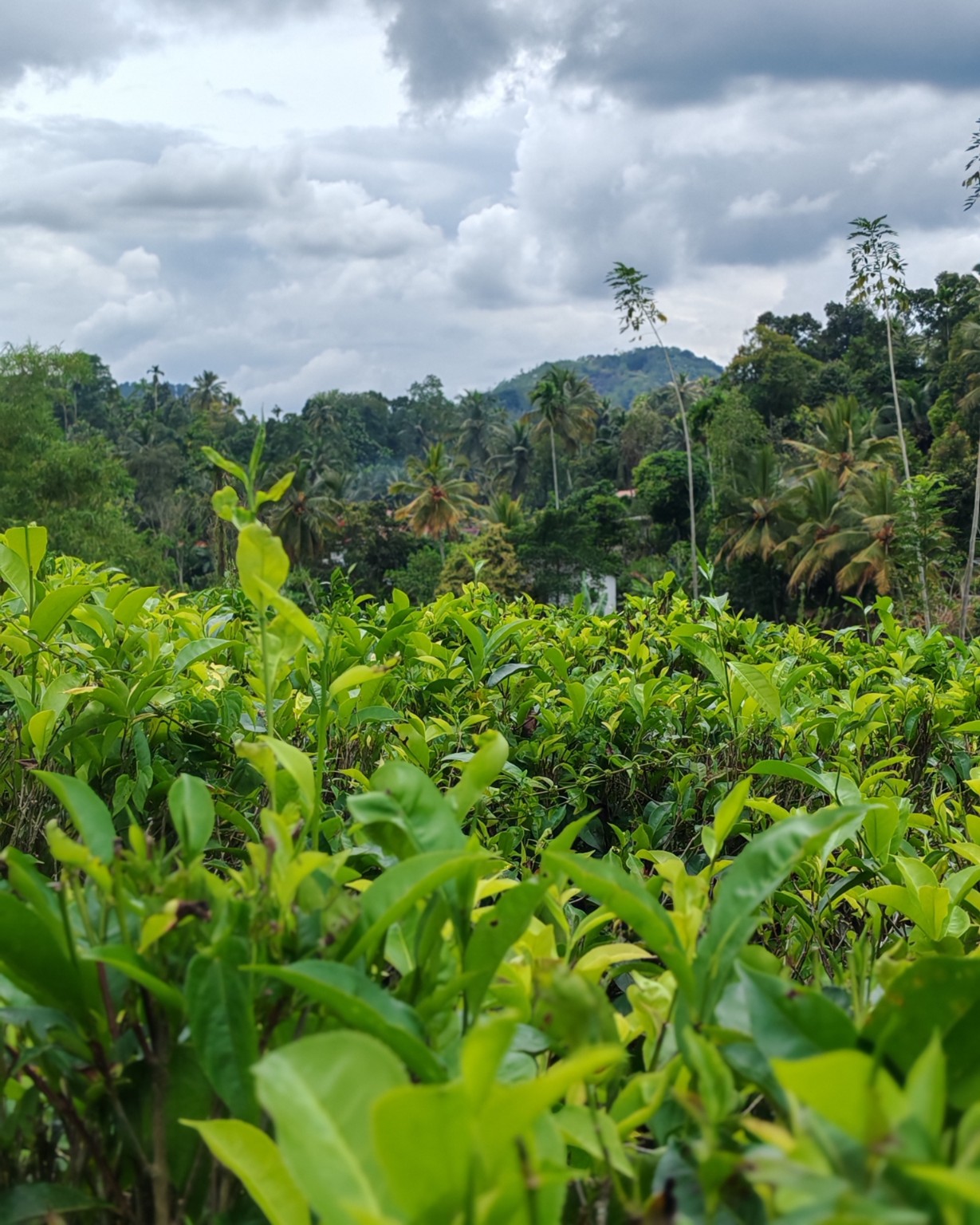
19 acres became the starting point of commercial tea cultivation associated with Taylor's successful experiments. By 1872, his tea factory was operating.
04 · FROM COFFEE ESTATES TO TEA ESTATES
The transition was enormous. More than 120,000 hectares of land had to be stripped of dead and dying coffee bushes and replanted with tea. Existing roads and other infrastructure could be adapted, helping the new industry expand rapidly.
Tea did not simply replace a crop. It changed the rhythm and identity of the highlands.
05 · THE FIRST CEYLON TEA
Tea had been experimented with in Ceylon before Taylor. Records show tea from China was planted experimentally as early as 1824, with further plants brought from Assam and Calcutta. Taylor was the planter who demonstrated a commercially successful system at Loolecondera.
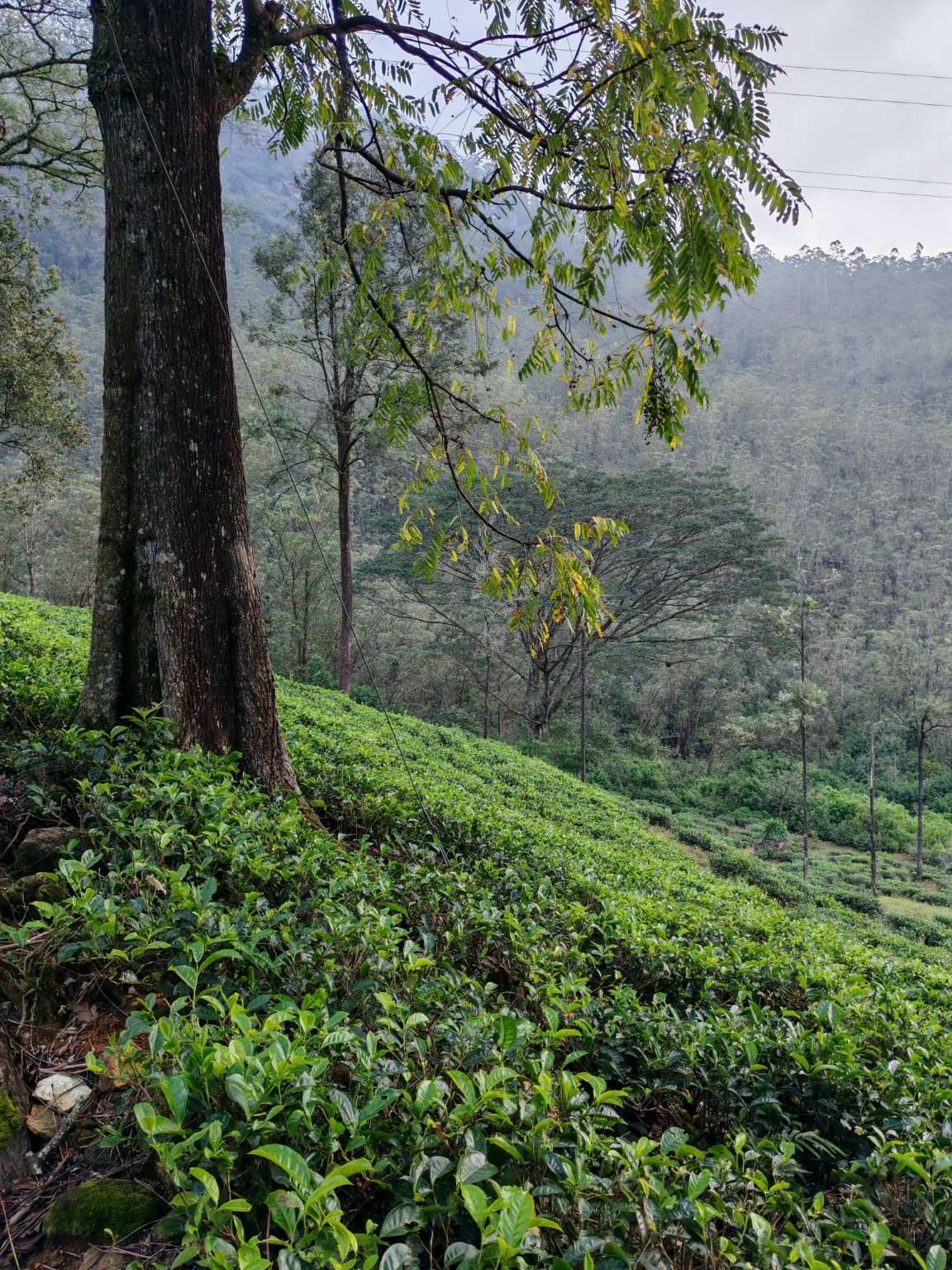
06 · THE MOUNTAINS BECAME TEA COUNTRY
Tea spread across the highlands and later into lower-growing regions. The landscape people now associate with Sri Lanka — carefully shaped tea fields, factory buildings, mountain roads, railway lines and estate communities — grew out of this transformation.
07 · THE PEOPLE BEHIND THE LEAF
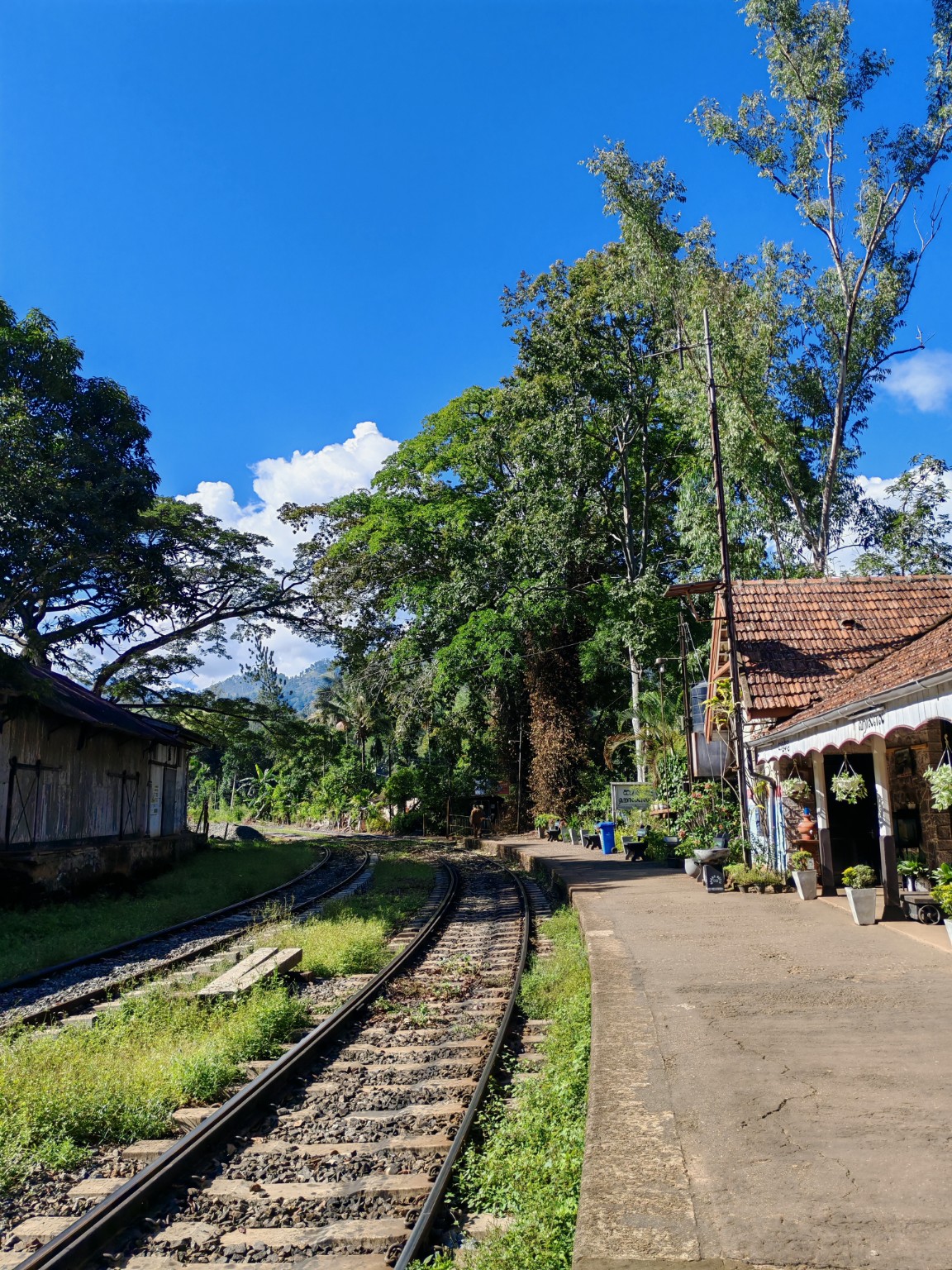
Tea is a labour-intensive crop. Plantation communities became a permanent part of the highland landscape, and generations of workers developed skills around plucking, field care, factory work, tasting and processing.
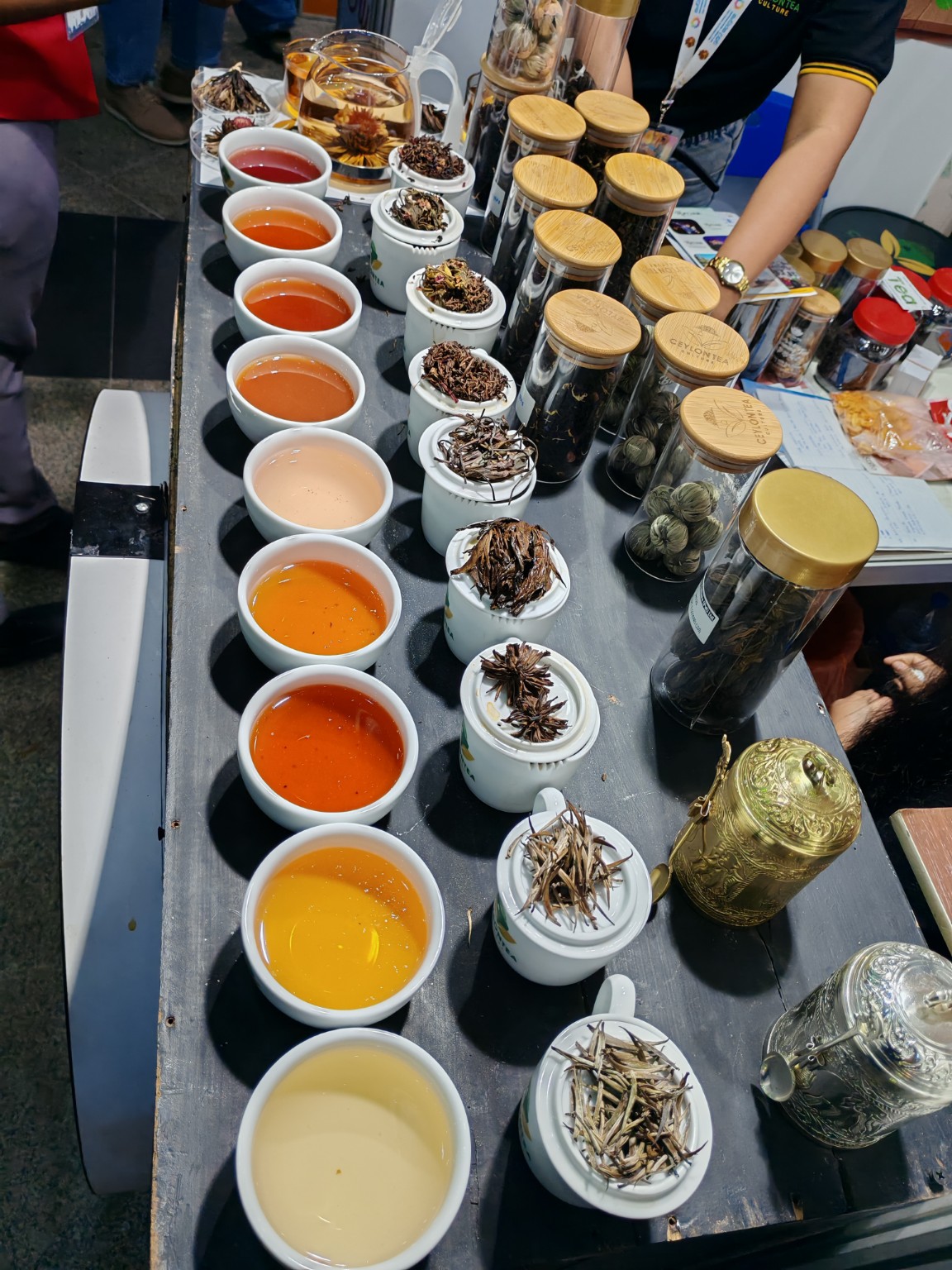
The history is also a social history, including difficult chapters of colonial labour and the long-term development of plantation communities. The beautiful landscape should not make us forget the human work behind it.
08 · HOW A LEAF BECOMES TEA
It is not simply picked and dried.
Traditional orthodox tea manufacture involves a sequence of carefully controlled stages. Fresh green leaf is brought from the field into the factory, where time, temperature, moisture and air all influence the final character.
Plucking → Withering → Rolling → Oxidation/Aeration → Drying → Sorting → Grading

09 · THE TEA FACTORY
Withering reduces moisture. Rolling shapes and breaks the leaf. Oxidation changes the chemistry and colour of the leaf. Drying stops those changes and produces the finished tea. Finally, the manufactured tea is sifted and graded by particle size.
The Sri Lanka Tea Board explains that leaf size affects the colour and strength of the brew, but leaf size is not a simple measure of quality.
10 · CEYLON TEA GOES GLOBAL 🌍
By the late nineteenth century, Ceylon Tea had become an important international product. Colombo developed a sophisticated tea trade, with expert tasters, brokers and auctions connecting estates to buyers around the world.
11 · THE RAILWAY & THE TEA COUNTRY 🚂
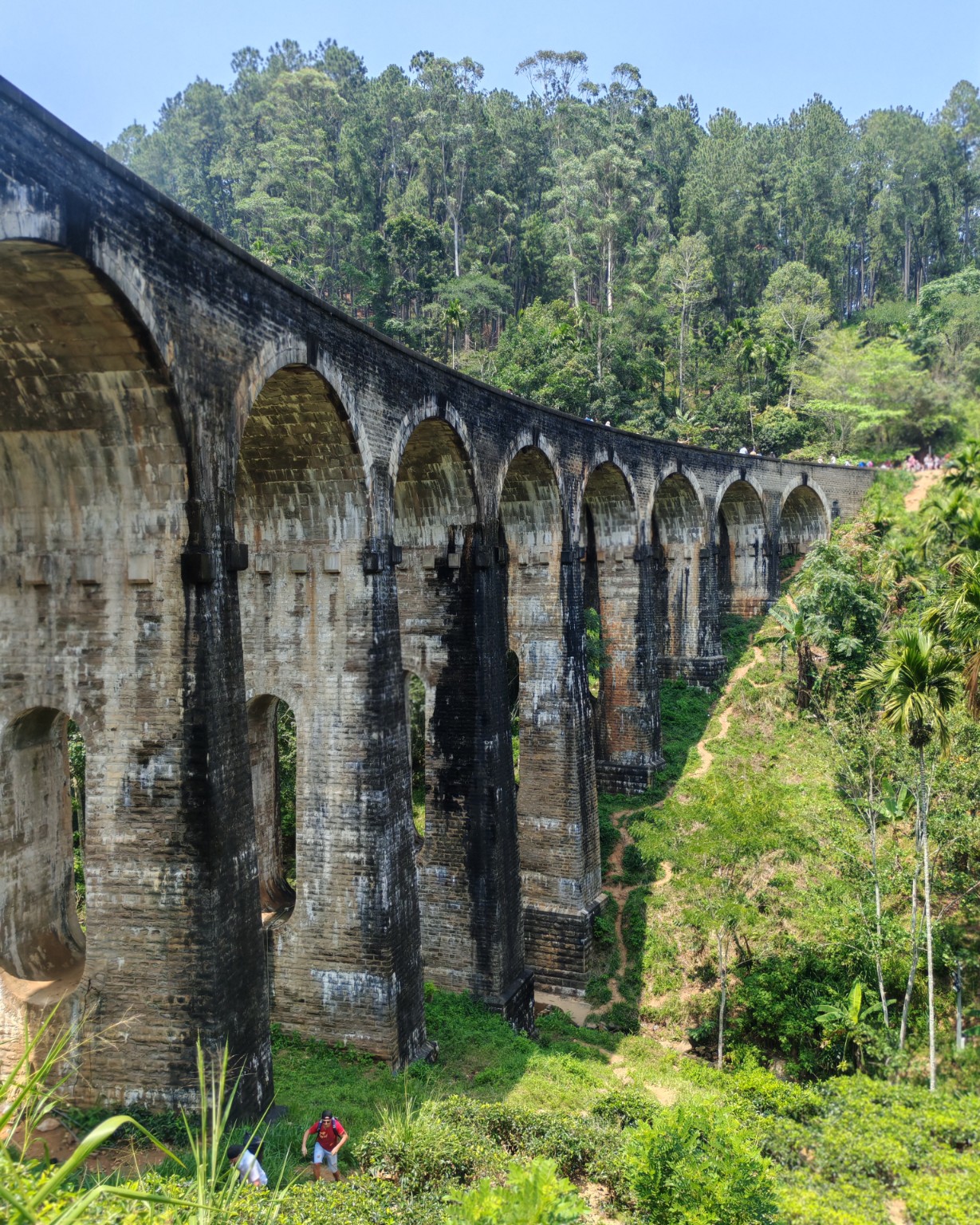
Railways became part of the infrastructure connecting the highlands with markets. The railway landscape around the tea country is now one of Sri Lanka's most recognisable travel experiences.

12 · THE LANDSCAPE OF CEYLON TEA
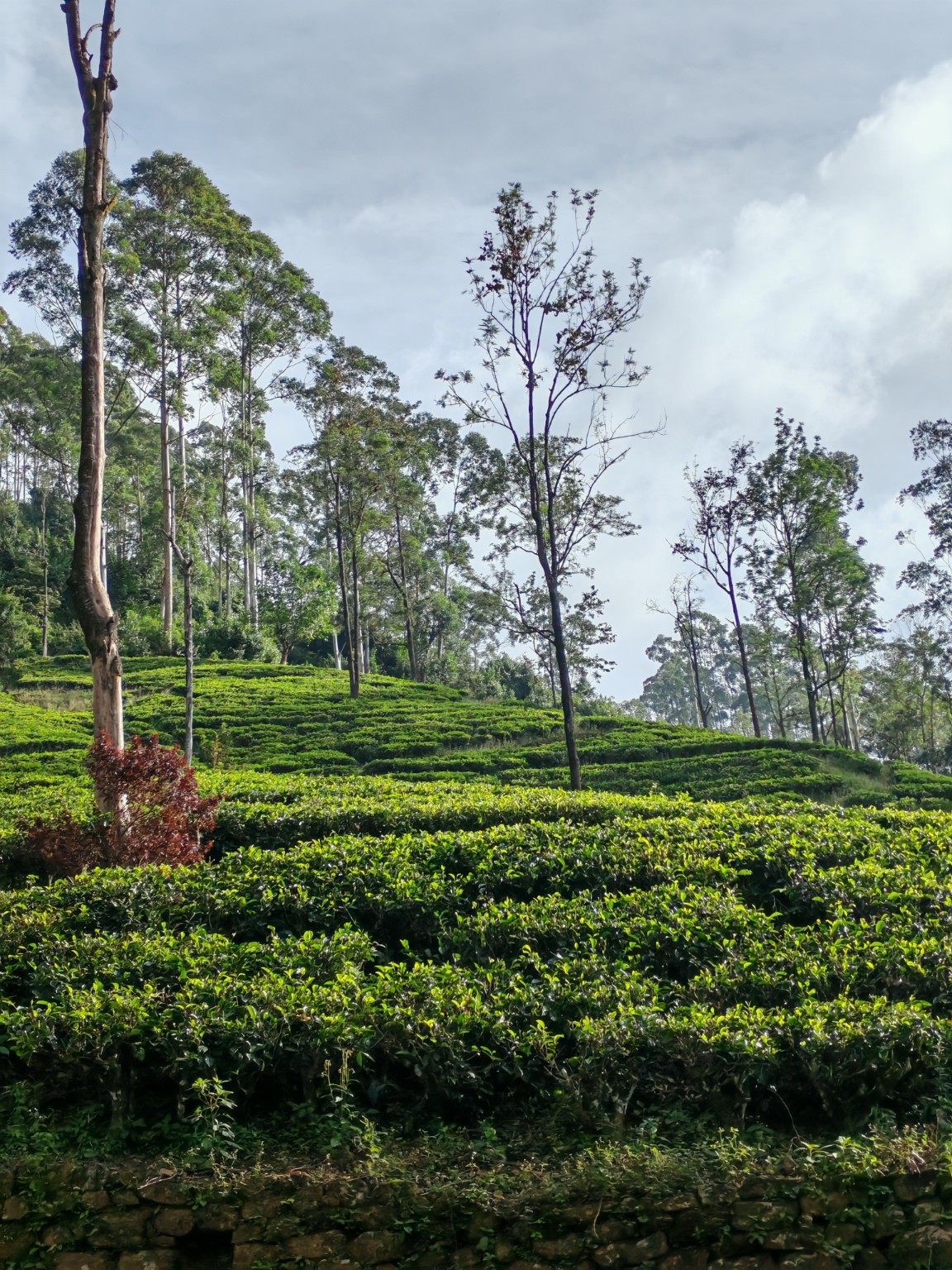
Altitude, rainfall, soil, sunlight and monsoonal winds contribute to regional differences. That is why the island's tea country is not one uniform tea landscape.
13 · SEVEN TEA REGIONS
The recognised agro-climatic regions are Nuwara Eliya, Uva, Uda Pussellawa, Dimbula, Kandy, Sabaragamuwa and Ruhuna. Each produces tea with different combinations of flavour, aroma, strength and colour.
14 · TEA GRADES & STYLES
When visitors see labels such as OP, FOP or BOP, they are looking at tea-grade terminology. These grades primarily describe leaf size, appearance and style of manufacture; they should not be treated as a simple “good to bad” ranking.
15 · THE LION LOGO
How to recognise Pure Ceylon Tea.
The Sri Lanka Tea Board's Lion Logo is a certification mark associated with qualifying Pure Ceylon Tea packed in Sri Lanka. For visitors buying tea to take home, it is a useful symbol to understand.
16 · CEYLON TEA & THE NAME
When the country became Sri Lanka in 1972, the international tea brand retained the name “Ceylon Tea.” The old geographical name had already become deeply established in tea markets around the world.
17 · THE WORLD'S FIRST OZONE-FRIENDLY TEA 🌍
Sri Lanka's tea industry progressively eliminated the use of methyl bromide in tea-sector applications as part of its environmental commitments under the Montreal Protocol. Sri Lanka received the Montreal Protocol Implementers Award in 2007.
The Sri Lanka Tea Board describes Ceylon Tea as the world's first and only ozone-friendly tea, with all tea grown in Sri Lanka considered 100% ozone-friendly under this distinction.
18 · SUSTAINABILITY & RESPONSIBILITY
The modern tea industry continues to work with environmental and quality standards, including measures around residue limits, manufacturing practices and sustainability initiatives. The story is still evolving.
19 · COFFEE IS COMING BACK ☕
And then the story comes full circle.
After tea transformed the highlands, Sri Lankan coffee did not disappear forever. Interest in local coffee has returned, with growers and businesses exploring the crop again. The revival is much smaller than the historic coffee enterprise, but it is an intriguing new chapter.
20 · A CUP TELLS A STORY
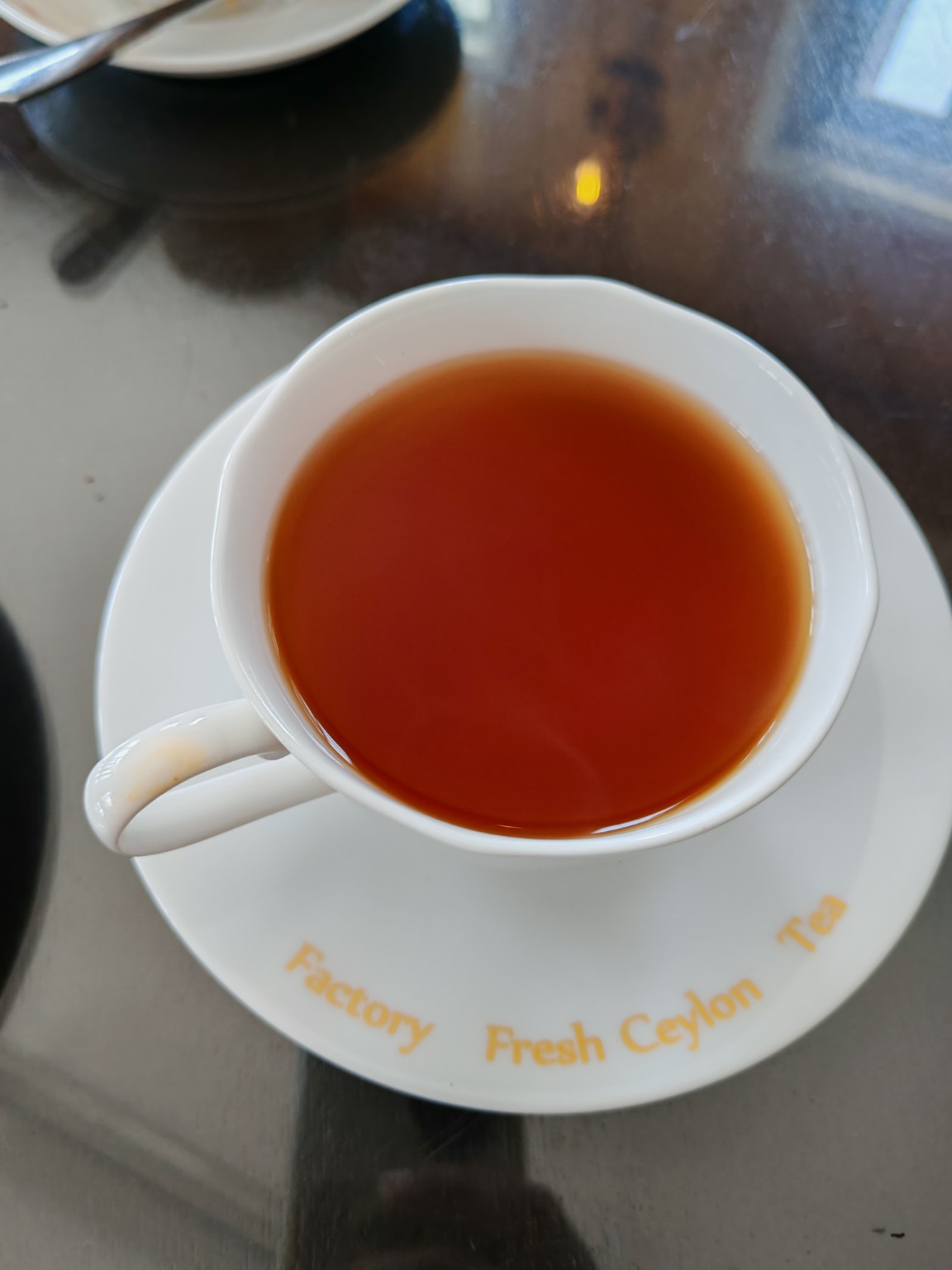
Think about the journey inside a cup: a mountain slope, a tea bush, a worker's hands, a factory, a railway, a trader, a tea taster, a packet — and finally a traveller sitting somewhere far away.
One island. One leaf. More than a century of history.
21 · KANRA & TEA COUNTRY 🍵
KANRA journeys through Sri Lanka's tea country are about more than taking a photograph of a green hillside. We want travellers to understand the landscape — the plantations, people, railway, factories, villages and history behind the view.
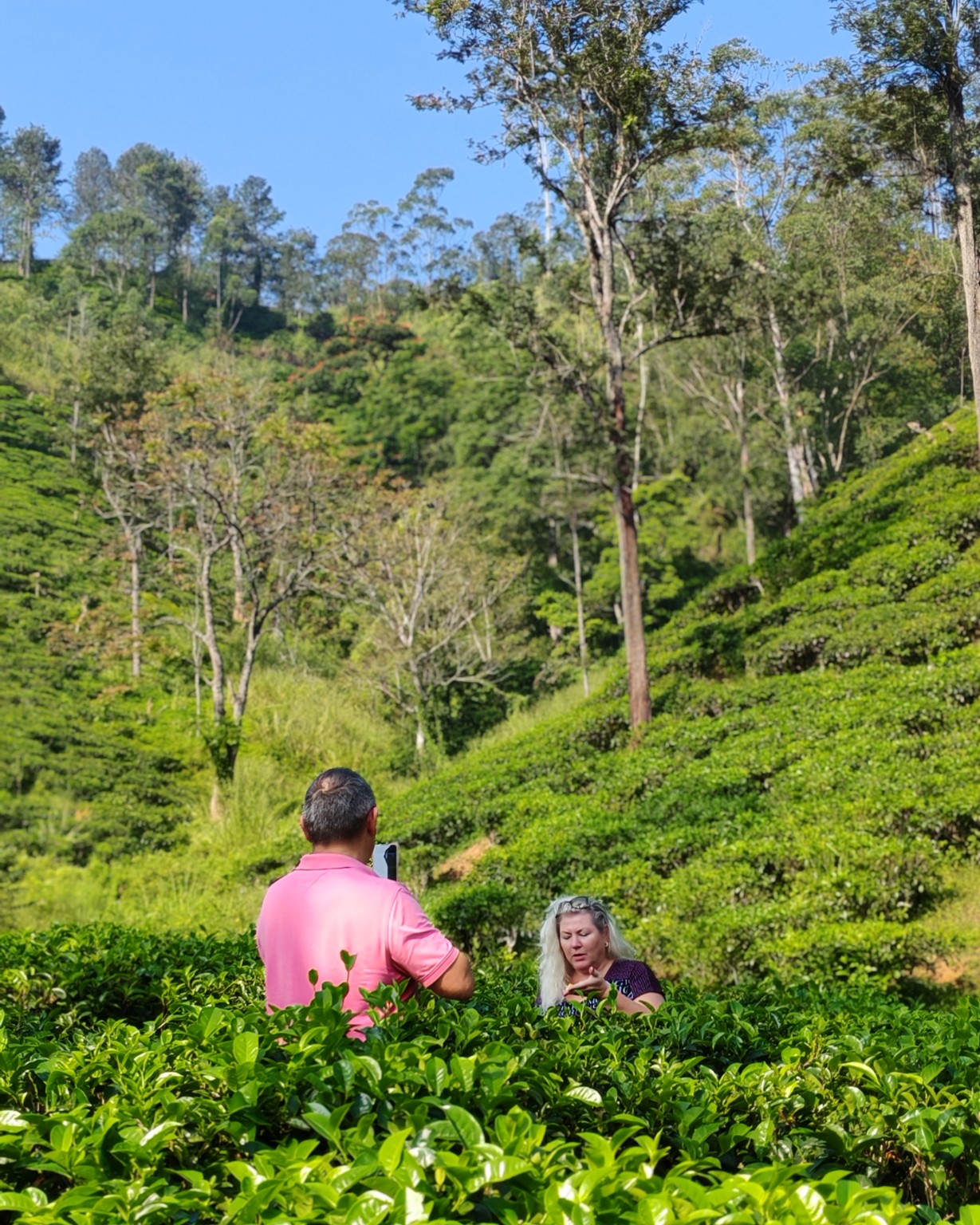
If you fall in love with Ceylon Tea while you're here and want to take some home, KANRA Tea Centre can help you take a little piece of Sri Lanka with you.
One cup can be a souvenir. But understanding the story behind it makes the souvenir mean a little more.
22 · FROM COFFEE TO TEA — AND BACK AGAIN
Perhaps that is the most beautiful part of the story.
Sri Lanka's tea country was not always tea country. Coffee once covered these mountains. Then disease changed the landscape. James Taylor and others helped build a new future with tea, and those green hills became famous around the world.
But the story did not truly end there.
Ceylon Coffee is finding its way back.
Step by step, farmers, growers, roasters and coffee lovers are rebuilding Sri Lanka's coffee culture — exploring old growing areas, new cultivation methods and specialty coffee with its own Sri Lankan character.
And perhaps that is the lesson.
Coffee has its history.
And both have a future.
The mountains that once grew coffee became famous for tea. Today, new generations are discovering that those same landscapes can tell another coffee story too.
A future where both can grow.
Ceylon Tea will continue carrying the name of Sri Lanka around the world. And perhaps, alongside it, Ceylon Coffee will once again find its own place.
Because Sri Lanka does not have to choose between the two.
There is room for a cup of coffee.
And there is room for both stories to continue.
One island. Many stories.
And sometimes, an entire history inside one cup.
When you travel through Sri Lanka's tea country, look beyond the green. Look at the old factory. Watch the railway disappear around a bend. Notice the hands picking the young leaves. Ask what is inside the cup.
That is where the story of Ceylon Tea really begins.
Take Sri Lanka Home.
Discover tea country with KANRA — and if you find a Ceylon Tea you love, visit KANRA Tea Centre to take a little of Sri Lanka with you.