
 Русский
 සිංහල
 Deutsch
 Français
 Nederlands
 Italiano
 Español
 简体中文
ELEPHANTS, PEOPLE & SRI LANKA
From ancient kings to Pinnawala — history, Buddhism, Kandy, the Perahera, human–elephant conflict and conservation.
The elephant has another story
Sri Lanka's elephant story is not only about wildlife. It also passes through ancient kingdoms, Buddhism, royal ceremony, Kandy, Pinnawala and the difficult relationship between elephants and people sharing one island.
Elephants in Ancient Sri Lanka
Elephants before the safari jeep
Long before modern wildlife tourism, elephants were part of Sri Lanka's human landscape. They appeared in royal life, transport, labour, warfare, ceremony, religious traditions and art.
Elephants & ancient Sri Lanka
Ancient Sri Lankan kingdoms developed around forests, reservoirs, agriculture and organised settlements. Elephants occupied this landscape too, both as wild animals and as animals brought under human control.
Elephant as a symbol of power
The elephant became associated with strength, prestige and authority. In royal contexts, possessing and controlling elephants could communicate status and power.
Kings, armies & royal ceremony
Historical accounts connect elephants with warfare, royal processions and ceremonial life. Their strength made them useful, while their presence also carried symbolic meaning.
Ancient reservoirs & elephant landscapes
The island's ancient reservoir systems transformed large parts of the dry zone. Today, those same landscapes can become important places for elephants and people — showing how deeply natural and human histories overlap.
Elephants, Buddhism & Sacred Kandy
Elephants in Buddhist tradition
Elephants appear in Buddhist stories and symbolism, including traditions surrounding strength, patience and the Buddha's life. In Sri Lanka, elephants also became part of the visual and ceremonial expression of Buddhist heritage.
Nalagiri
The story of Nalagiri, the elephant sent against the Buddha, is one of the best-known elephant narratives in Buddhist tradition. In the story, the Buddha responds with compassion and calm rather than violence.
The Sacred Tooth Relic
The Sacred Tooth Relic is central to Kandy's religious and cultural identity. The elephant became part of the ceremonial tradition surrounding the relic and its public procession.
Why Kandy matters
Kandy is a UNESCO World Heritage cultural city and an important centre of Sri Lankan Buddhist heritage. Its elephant traditions cannot be separated from this wider sacred landscape.
Kandy Esala Perahera
Kandy Esala Perahera
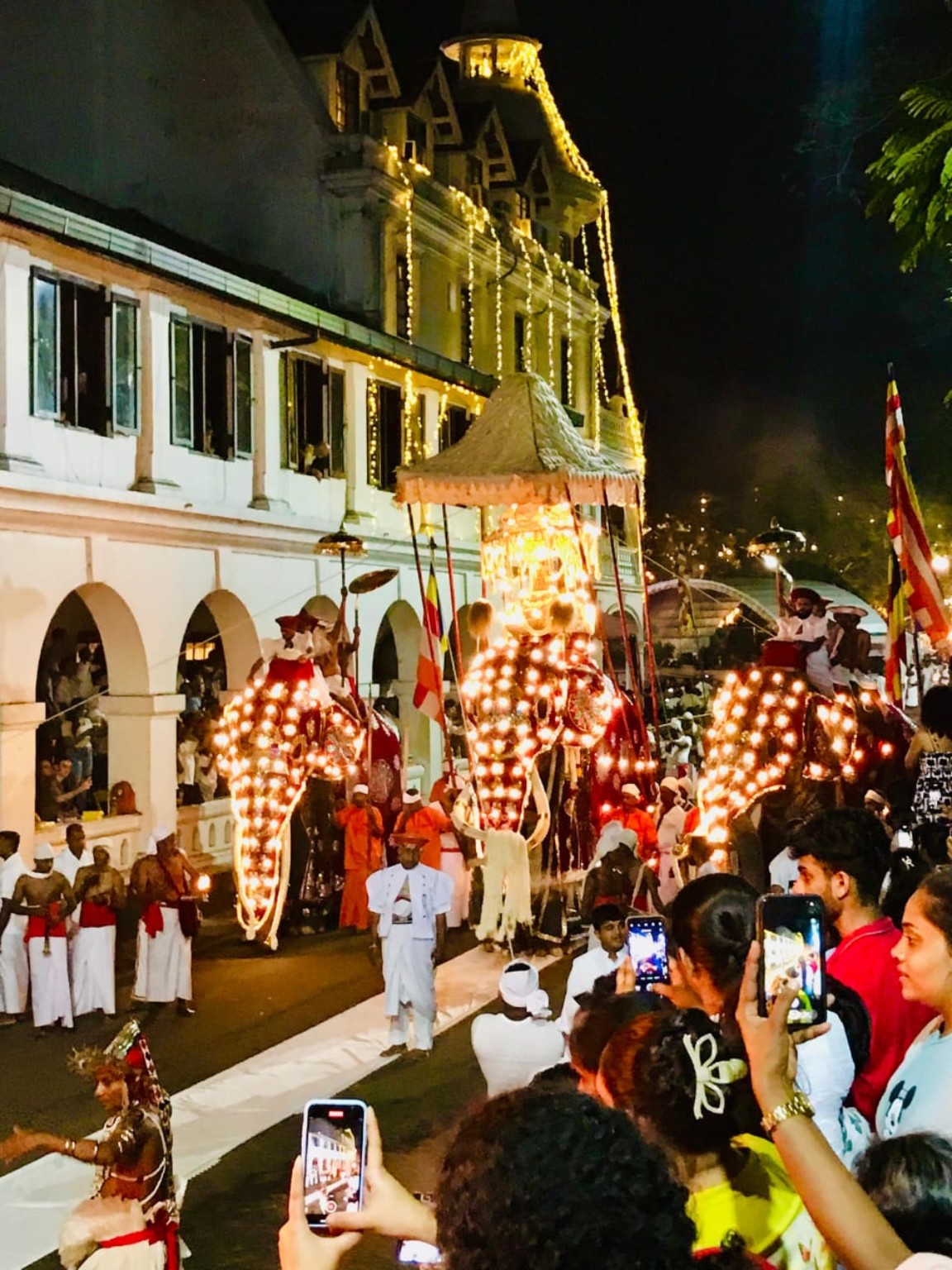
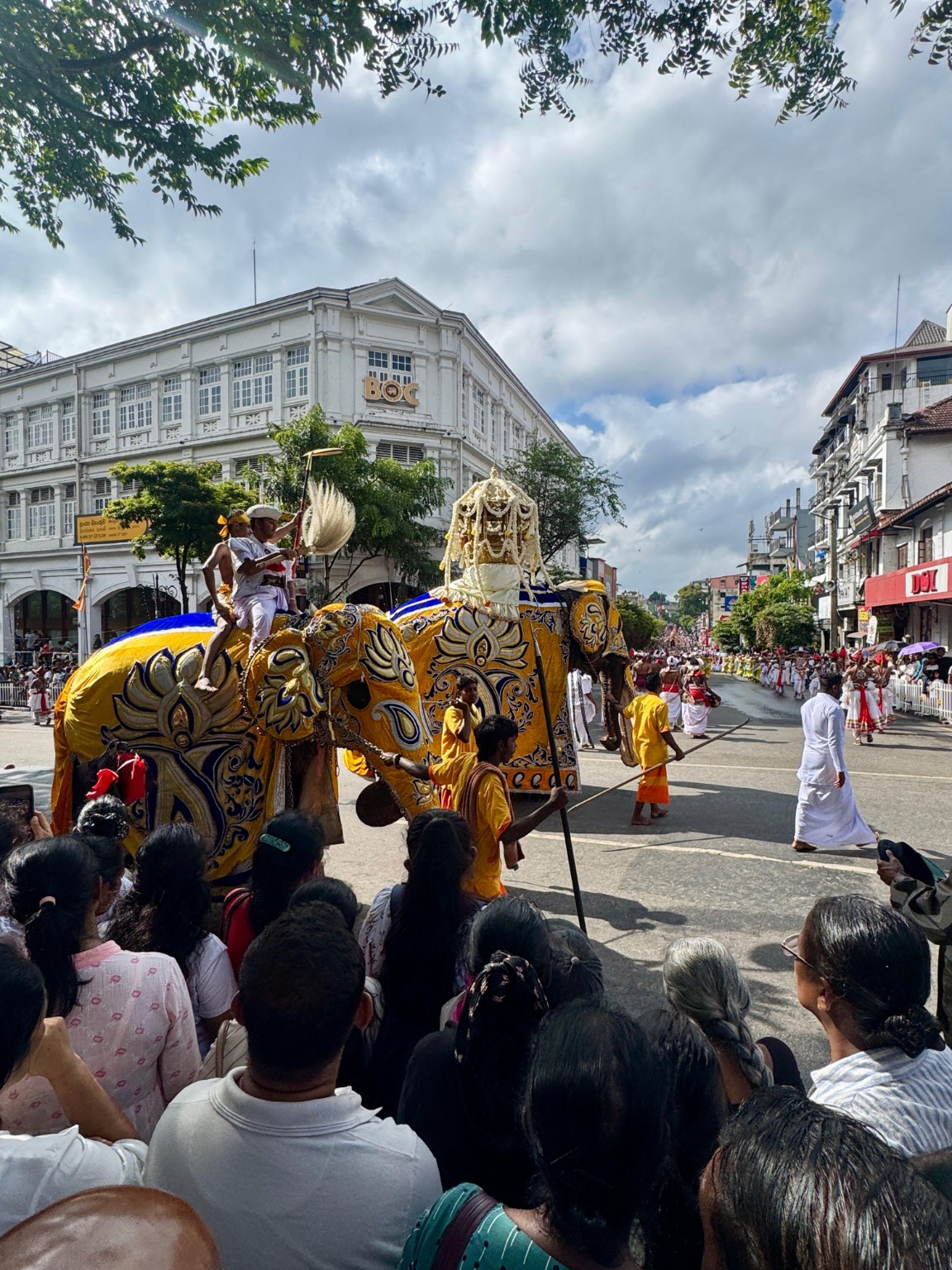
The Kandy Esala Perahera is an annual religious and cultural procession held in Kandy. A specially decorated Maligawa Tusker carries the canopy sheltering the replica casket associated with the Sacred Tooth Relic. The procession combines drummers, dancers, traditional performers and elephants in a deeply established living tradition.
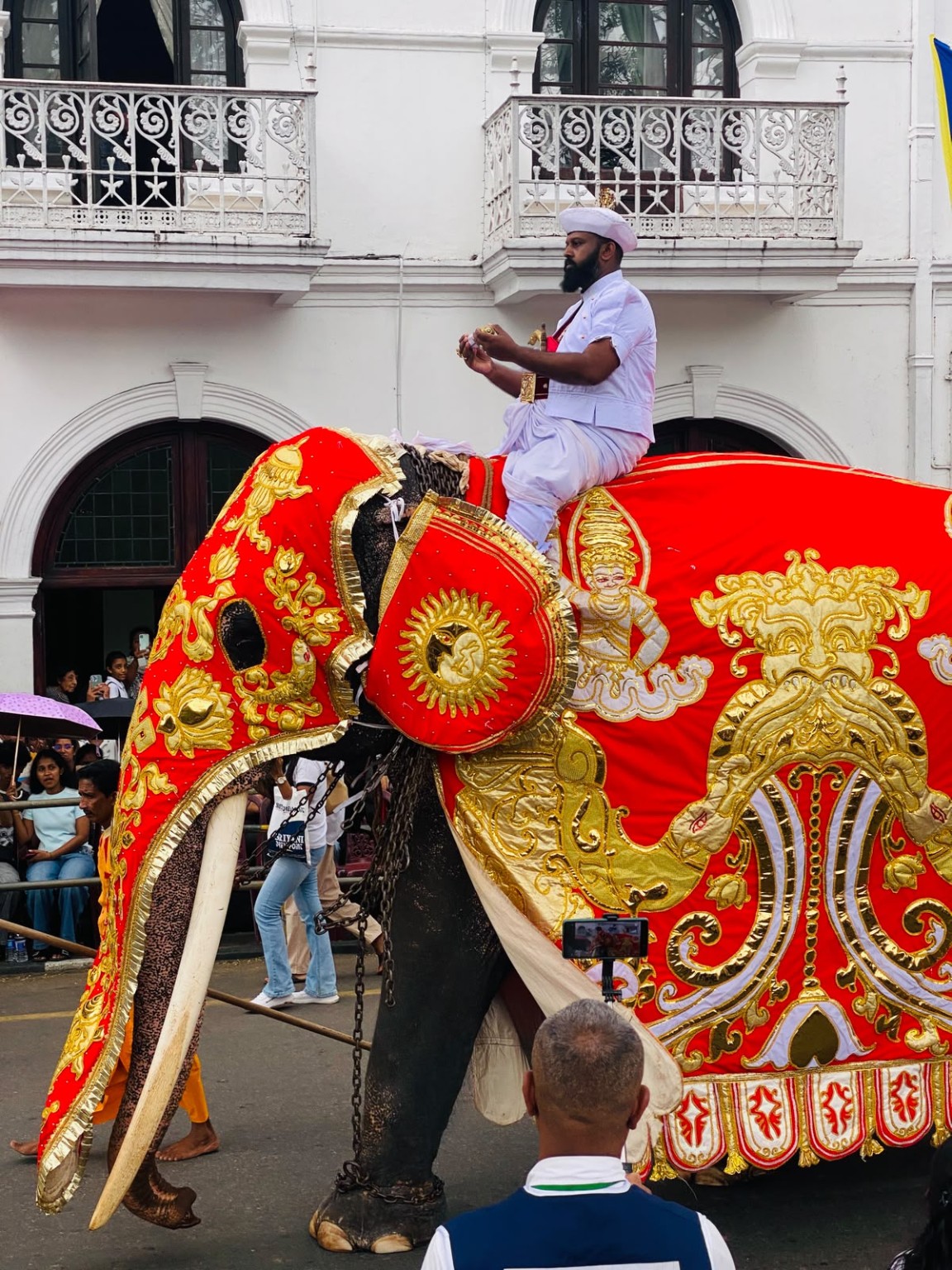
The Maligawa Tusker
The chief tusker has a highly visible ceremonial role. The animal is prepared and decorated for the procession, and its presence carries religious significance within the tradition.
Why are elephants decorated?
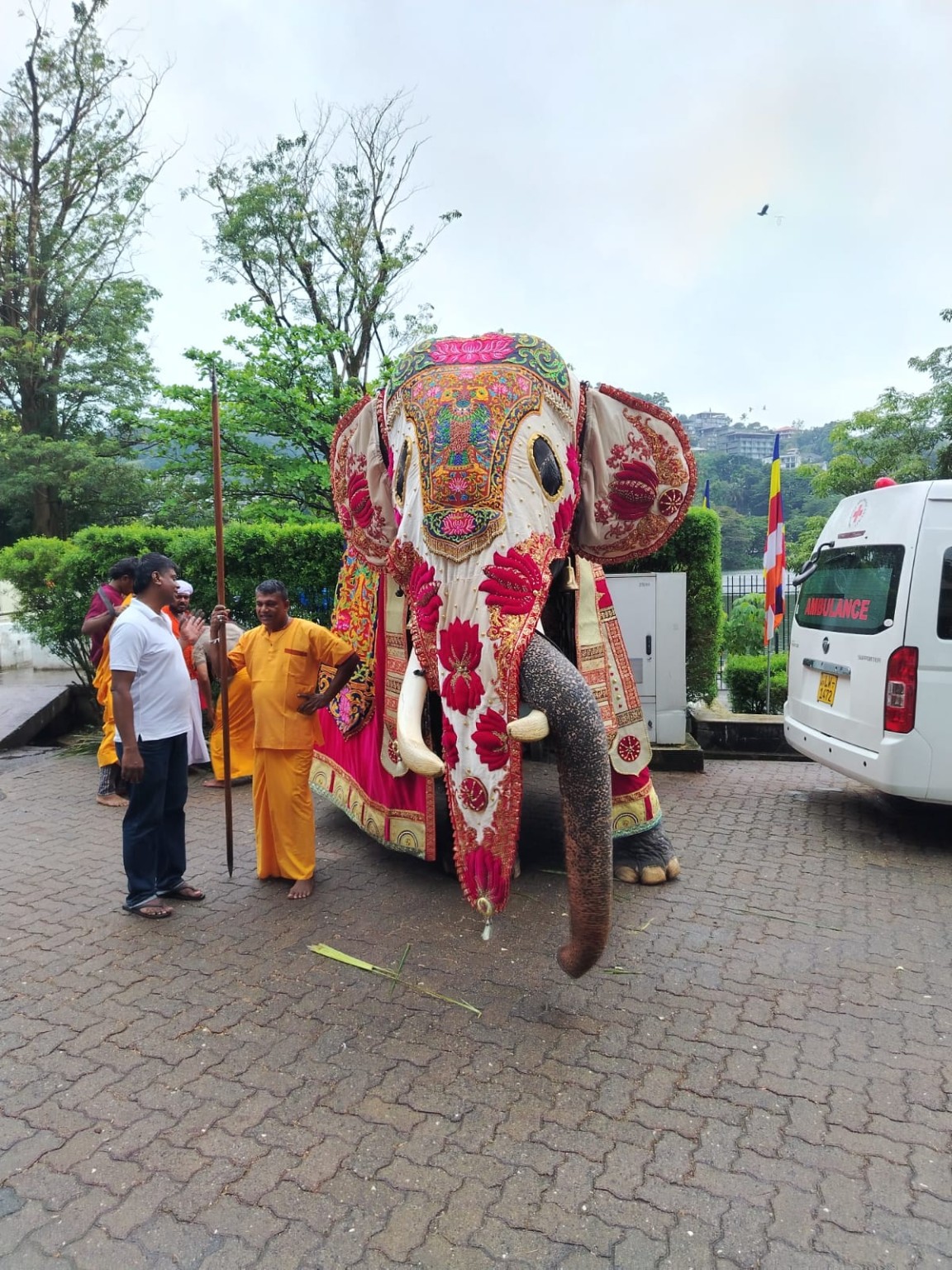
Caparisoning is part of the visual language of the procession. Decorative coverings, ornaments and ceremonial presentation distinguish the animals taking part in this public religious event.
A living tradition
The Perahera is not simply a historical reenactment. It continues as a living religious and cultural event, experienced by residents and visitors each year.
Pinnawala: Care, History & Change
Pinnawala: a different elephant story
Pinnawala introduces another side of Sri Lanka's elephant relationship: elephants under human care, public education, veterinary care and managed daily routines.
Why was Pinnawala created?
Pinnawala Elephant Orphanage was established on 16 February 1975 by Sri Lanka's Department of Wildlife Conservation with five orphaned elephant calves. It later developed into a centre known for elephant care, breeding, veterinary support and public education.
The first calf born at Pinnawala
The first elephant calf born at Pinnawala was Sukumali in 1984, an important moment in the institution's history.
Pinnawala today
Pinnawala is now under the National Zoological Gardens. Its current programme includes elephant care, nutrition, veterinary attention, breeding, behaviour and welfare, alongside visitor education.
When People See Chains
“Why is that elephant chained?”
Visitors sometimes notice that some elephants are restrained at particular times, and naturally they may wonder why. The answer is connected to elephant management, safety and the individual animal's circumstances.
Musth: when a bull elephant changes
Musth is a natural periodic condition in adult male elephants associated with major hormonal changes. It can involve heightened reproductive and competitive behaviour and, in some individuals, increased unpredictability or aggression. Managing a large adult bull during such a period can require additional safety measures.
“But I saw chains.”
Yes — a visitor may see an elephant being restrained. Seeing that can be uncomfortable, and it is reasonable to ask why. At the same time, one photograph does not explain an individual animal's full circumstances, and not every elephant at Pinnawala is necessarily restrained continuously or for the same reason.
Pinnawala is changing
Pinnawala has also been developing newer welfare approaches. The National Zoological Gardens describes a Free Elephant Enclosure designed around newer animal-welfare concepts, giving adult males greater freedom within a secure environment.
Wild vs elephants under human care
These are different worlds. A wild elephant makes its own decisions about movement, food, social life and habitat. An elephant under human care lives within a managed environment where people are responsible for safety, health and daily care.
Wild Elephants & Human–Elephant Conflict
The other side of the elephant story
There is another difficult reality: Sri Lanka's wild elephants and people increasingly share landscapes used for farms, homes, roads and other development.
People & elephants need the same land
Elephants need large connected landscapes for food, water and movement. People need land for homes, farming, transport and livelihoods. When those needs overlap, conflict can occur.
Why elephants enter farms
Food availability, seasonal movement, habitat fragmentation and changes in land use can bring elephants into agricultural areas. From the elephant's perspective, a cultivated field does not have a human property boundary.
Roads & railways
Transport infrastructure can cut through elephant movement routes and create serious risks for both wildlife and people. Safe crossings, careful planning and movement corridors are part of the wider conservation challenge.
An elephant doesn't know a property boundary
A fence line exists on a map. An elephant experiences the landscape as connected space. That difference is at the heart of many human–elephant conflict situations.
Human–elephant conflict
Human–elephant conflict is not one simple problem. It can involve crop damage, property damage, injuries and deaths, while elephants can also be injured or killed. Solutions therefore need to consider both human safety and elephant conservation.
From Protected Areas to Practical Conservation
What is actually being done?
Sri Lanka's conservation framework includes protected areas, wildlife reserves, sanctuaries and jungle corridors. Conservation work also involves habitat management, research, community awareness, mitigation and efforts to reduce dangerous encounters.
Elephant corridors
Keeping movement routes connected can help elephants move between important habitats rather than being forced into increasingly fragmented spaces.
Tracking movement
Modern conservation can use field observations, research and tracking methods to understand where elephants move and where conflict risks are concentrated.
Conservation is not perfect
There is no single solution that makes every conflict disappear. Conservation is an ongoing process involving science, policy, local communities, land use and difficult choices.
Meeting Elephants Responsibly
What travellers can do
Choose responsible wildlife experiences. Keep distance from wild elephants, listen to guides, never feed or chase animals, and avoid encouraging close encounters simply for photographs.
The elephant in two worlds
One island can contain a wild elephant crossing a forest at sunrise, an elephant under human care beside a river, and a decorated elephant taking part in a centuries-old cultural tradition. These are connected histories, but they are not the same experience.
We don't hide difficult questions
A responsible travel story should allow visitors to ask uncomfortable questions. Understanding is stronger than pretending every part of the relationship is simple.
If you visit Pinnawala
Observe rather than demand interaction. Follow staff instructions, respect barriers and routines, and remember that the elephants are living animals, not performers created for photographs.
If you see a restrained elephant
Ask questions respectfully. Avoid jumping from one photograph to a conclusion about the entire institution or an individual animal. The circumstances, timing and welfare needs can matter.
If you see wild elephants
Keep a safe distance, never block their route, never feed them and never attempt to create a close encounter. Give the elephant the right of way.
If you watch the Kandy Perahera
Remember that you are witnessing a religious and cultural tradition. Watch respectfully, follow event instructions and allow the procession to move without interference.
Know their history. Respect their space. Understand their world.
Read a story. Then discover the place.
Stories are for curiosity. Journeys are for experiencing Sri Lanka in person.