
 Русский
 සිංහල
 Deutsch
 Français
 Nederlands
 Italiano
 Español
 简体中文
THE ELEPHANTS OF SRI LANKA
GIANTS OF THE ISLAND — Nature, behaviour, family, food, memory and the Elephant Gathering.
When you first see an elephant
The first thing you notice is size. Then the trunk moves, an ear opens, a calf disappears behind an adult — and suddenly the giant in front of you feels less like a monument and more like a living personality.
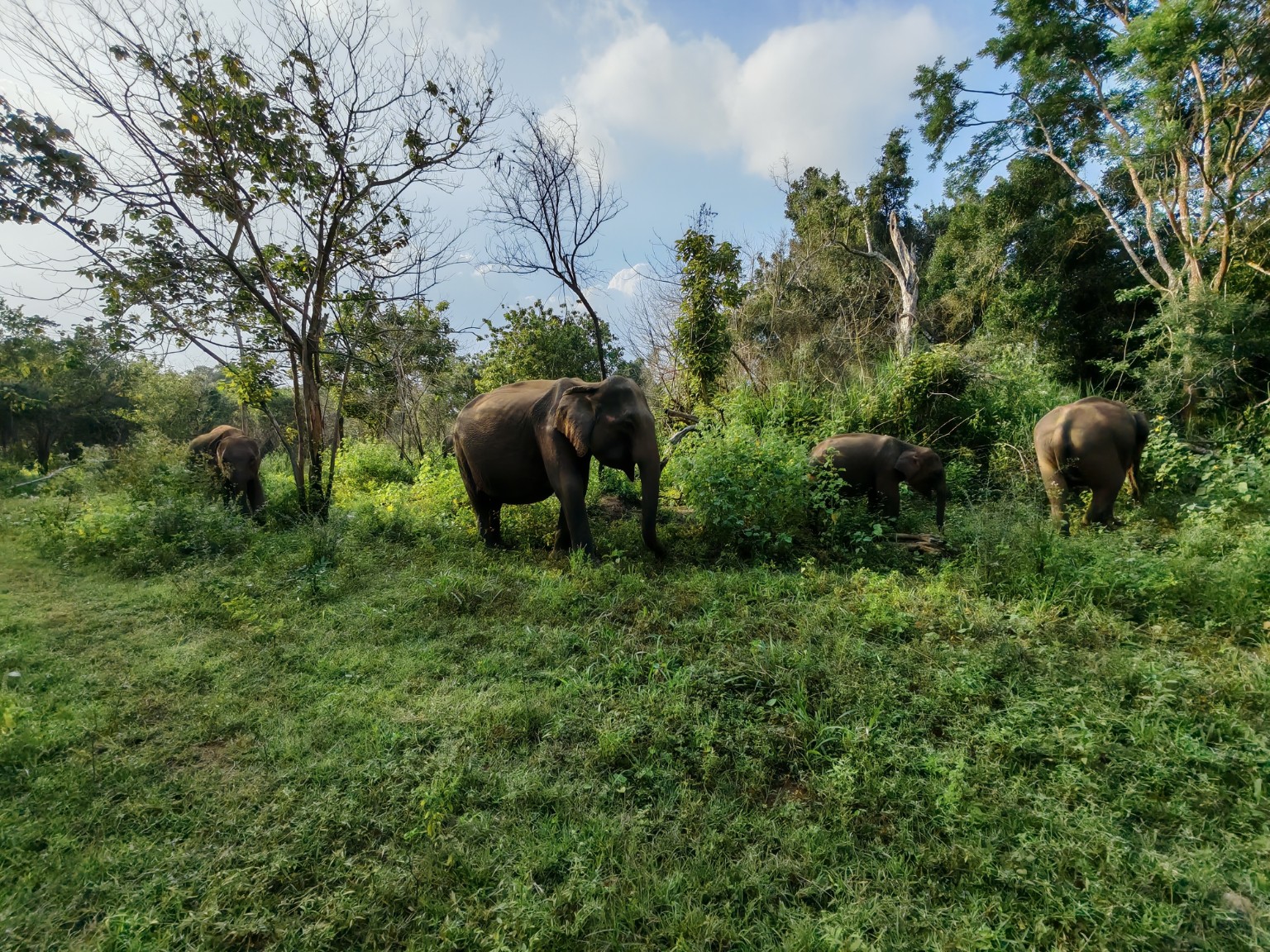
Meet the Sri Lankan Elephant
Just how big is an elephant?
The Sri Lankan elephant is the largest of the Asian elephant subspecies. Adult males can be especially imposing, while females usually live in family groups. Size is only the beginning of the story: elephants combine strength with remarkable coordination, sensitivity and social behaviour.
Meet the Sri Lankan elephant
Elephants are native to Sri Lanka and are part of the island's natural heritage. They are herbivores, but “herbivore” hardly describes the scale of their daily lives — an elephant spends much of its time feeding, moving, drinking, resting and interacting with other elephants.
A Giant Built for Life
The trunk: nature's multi-tool
The trunk works as nose, hand, drinking tool, feeding tool and communication instrument. An elephant can use it to pull vegetation, investigate objects, smell, touch another elephant and draw water for drinking.
An incredible nose
Smell is central to elephant life. Their trunks constantly sample the environment, helping them investigate food, water, other animals and changing conditions around them.
Do elephants really have long memories?
Elephants have impressive learning and social memory. Individuals can recognise familiar elephants and people, remember routes and water sources, and learn from experience. “Never forgets anything” is a fun phrase — real elephant memory is more complicated, but genuinely remarkable.
Food, Water & Communication
The daily menu
Elephants spend many hours feeding. Grass, leaves, bark, roots, fruit and other vegetation can all become part of the menu depending on season and habitat. The exact amount eaten varies with body size, food quality, season and activity, so there is no single number that fits every elephant.
How much water?
Water is essential for both drinking and cooling. Elephants may drink large quantities and also use water for bathing and spraying. Their needs change with heat, food, body size and activity.
The elephant's secret language
Trumpets are only part of the conversation. Elephants also communicate through rumbles, body posture, touch, ear movements and sounds that can travel over distance.
Family, Birth & Growing Up
Elephant families
Wild elephant society is strongly social. Female-led family groups can include mothers, daughters, sisters and calves, while adult males often spend more time separately and may move between groups.
Almost two years before birth
Elephant pregnancy is exceptionally long — roughly 22 months. That long development gives a calf time to arrive with a surprisingly capable body, but it still depends on its family for protection and learning.
The baby elephant
Calves learn by watching. They practise using the trunk, follow older elephants, explore food and water, and gradually discover how to behave within the herd. The family is a classroom.
The Elephant Body
Six sets of teeth
Elephants do not replace teeth in the same way humans do. Their large cheek teeth move forward through the jaw as worn teeth are replaced by new sets. Their feeding lifestyle demands a remarkable dental system.
Those giant ears
The large ears help with communication and heat exchange. In Sri Lanka's warm climate, moving blood through the ears and flapping them can help an elephant manage body heat.
The world's biggest mud bath
Mud is more than fun. Elephants use water, mud and dust on the skin for cooling and protection. A muddy elephant may simply be taking excellent care of itself.
Tusks: not every elephant has them
Tusks are enlarged incisors. In Asian elephants, prominent tusks are much more common in males, while many males and most females may have small tusk-like teeth or none visible externally. So a tuskless elephant is not unusual.
How far does an elephant travel?
There is no reliable single “kilometres per day” figure for every elephant. Movement depends on habitat, food, water, season, family needs and human land use. Some days are active; others are not.
Reading the Landscape
The elephant you don't see
Sometimes the elephant is already gone. Footprints, dung, broken branches, stripped bark and flattened vegetation can reveal a recent passage. Learning to read these signs changes the way you walk through the landscape.
Elephant dung
Yes, dung matters. It returns nutrients to the soil, carries seeds and supports insects and other organisms. Even the elephant's toilet becomes part of the ecosystem.
Ecosystem engineer
By feeding, trampling, opening vegetation and moving seeds, elephants can reshape habitats. Their movements can influence how plants regenerate and how other animals use the landscape.
The Elephant Gathering
The Elephant Gathering
One of Sri Lanka's most extraordinary wildlife spectacles is the seasonal concentration of elephants around water and feeding grounds in the Cultural Triangle.
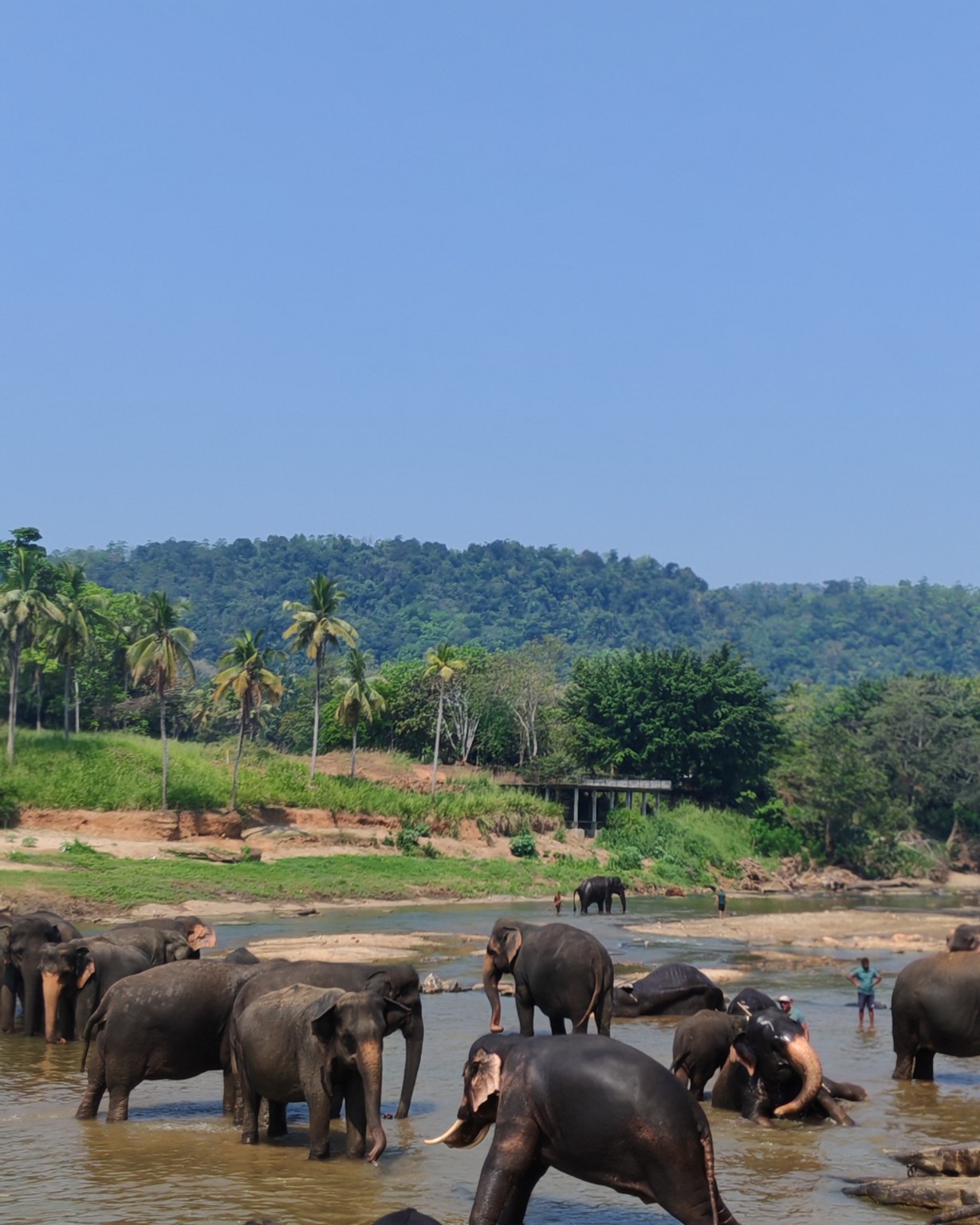
Minneriya
Minneriya is especially associated with seasonal elephant gatherings. The exact numbers and locations vary with rainfall, water levels, food and elephant movement.
100… 300… 500… 700?
Large gatherings are often described with impressive numbers, but counts vary between years and methods. The important point is the phenomenon itself: many elephants can converge in a relatively small landscape during favourable conditions.
Minneriya & Kaudulla
Elephants move across a wider landscape rather than following a tourism timetable. When water and food conditions change, their distribution can change too.
Udawalawe
Udawalawe is another place where elephants are a major part of the wildlife experience. Seeing them in open habitat can reveal different behaviours from a forested or river setting.
Living Alongside Giants
Why elephants move
Food, water, breeding, social relationships, seasonal conditions and landscape change all influence movement. A wildlife safari is a moment inside a much larger life.
When an elephant comes close
Give it space. Stay calm, listen to your guide and never try to force an encounter. A wild elephant is not a photo prop.
Photograph comes second
Lower the camera when necessary. If an elephant changes direction, shows agitation or comes too close, the photograph is no longer the priority.
The moment you remember
The best elephant encounter may be the quiet one: a family crossing the road, a calf following its mother, or a herd disappearing into grass without noticing you.
KANRA & the Giants
KANRA & the giants
We want elephant experiences to create understanding, not simply photographs. The more we understand their behaviour and the landscapes they need, the more meaningful the encounter becomes.
Read a story. Then discover the place.
Stories are for curiosity. Journeys are for experiencing Sri Lanka in person.